
Stainless steel is one of the most important materials in different metal fabrication workshops. That’s primarily because of its excellent strength and corrosion resistance. However, this alloy has different grades with varying compositions. Among these, 303 and 304 stainless steel grades are very common. However, people often debate 303 vs 304 stainless steel.
Some people consider the 303 stainless steel grade a superior option primarily due to its ease of machining. However, others consider 304 better, as it offers ideal corrosion resistance. These differing opinions can be confusing, especially for beginners. In this article, I will discuss the differences between these stainless steel grades. So, let’s get started.
What is the Difference Between 303 vs 304 Stainless Steel?
First things first – stainless steel is an alloy known for its corrosion resistance. This material contains a high level of chromium (over 10.5%). This chromium forms a chromium oxide layer when it comes into contact with oxygen. This surface oxide layer makes stainless steel an excellent option for resisting rust and corrosion.
Interestingly, both 303 and 304 stainless steel grades have excellent properties. When comparing them, we will look at the finer details. This way, you’ll know which one is ahead and why. This comparative guide will focus on a more in-depth analysis of their properties. Let’s discuss the differences between 303 and 304 stainless steel grades.
1- Chemical Composition (Sulfur Content)

The 303 and 304 stainless steel grades primarily differ in their chemical composition. As a result, other differences between these grades arise. The table below compares their chemical compositions.
| Element | 303 Stainless Steel (%) | 304 Stainless Steel (%) |
| Chromium | 17 – 19 | 18 – 20 |
| Nickel | 8 – 10 | 8.0 – 10.5 |
| Sulfur | ≥ 0.15 | Less than 0.03 |
| Manganese | Less than 2 | Around 2 |
| Silicon | Up to 1 | 1 |
| Carbon | 0.15 | 0.08 |
303 stainless steel has slightly lower chromium content than 304 stainless steel. This difference is minor, but you’ll notice the impact of this difference if observed critically. The major compositional difference is sulfur. 303 stainless steel contains over 0.15% sulfur. In contrast, 304 stainless steel has a very low sulfur content (less than 0.03%). This higher sulfur content in the 303 grade makes it easier to machine and fabricate.
2- Machinability & Weldability
The 303 stainless steel grade has excellent machinability. Cutting, forming, and shaping this grade are very easy. That’s why metal fabrication workshops widely use this stainless steel. This ease of machining is primarily due to the presence of sulfur. However, in terms of weldability, the 303 grade is not the best. Why? Its sulfur content makes welding difficult by causing cracking.
Additionally, a weld on 303 grade will be very weak and deteriorate easily over time. On the other hand, 304 stainless steel grade has poor machinability. During cutting, this material can also stick to the cutting tool. It’s harder, which causes cutting tools to wear out quickly. However, it welds easily because it contains very little sulfur. The ease of weldability of these 304 stainless steels makes them stand out.
303 stainless steel offers better machinability. However, it is not ideal if you plan to cut it with laser cutters. I recommend choosing 304 stainless steel, as it produces smooth edges when laser-cut. You’ll get clean edges with no roughness. Additionally, its stable, uniform structure withstands heat better. You can cut 303 stainless steel with a laser cutter, but its edges become rough.
3- Appearance & Surface Finish
Visual appeal matters. You might be choosing material for making decorative products. That’s where the appearance and surface finish of 303 and 304 grades become important. 304 stainless steel has an excellent, smooth appearance with no roughness. It has an excellent shine, which makes it more attractive and aesthetically appealing.
On the other hand, the 303 stainless steel grade has a less uniform structure. Tiny holes on the surface make this material look a bit off. Additionally, the surface finish of 303 grade is rougher and less ideal. That’s why choosing 304 stainless for making decorative items makes sense.
3- Durability & Corrosion Resistance
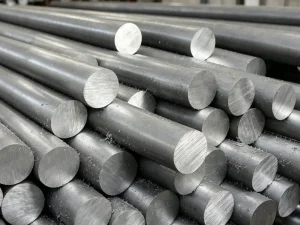
304 stainless steel stands out due to its excellent corrosion resistance and durability. As discussed above, this stainless steel grade has a higher chromium content. This chromium forms a very uniform oxide layer on the surface. This coating protects this grade from corrosion. Better corrosion resistance simply means excellent durability.
However, the 303 stainless steel grade has compromised corrosion resistance. It contains sulfur, which causes sulfur inclusions. As a result, the surfaces of these 303 grades have tiny pores that affect the formation of chromium oxide layers. The weakened chromium oxide layer does not protect this grade from corrosion. This results in lower durability of this stainless steel grade.
Quick Highlight: If you’re in the marine industry, you should use 304 stainless steel. As you know, parts used in marine sectors are exposed to moisture. They are more susceptible to corrosion. 304 stainless steel makes them stronger and more corrosion-resistant. If corrosion resistance doesn’t matter to you, consider grade 303; it makes sense.
4- Galling & Heat Resistance
Galling resistance is an important consideration. Galling resistance means the material does not tear or deteriorate when rubbed against other metal surfaces. 304 stainless steel has limited galling resistance. Why? That’s because of its sticky nature; when it rubs against other metals, it sticks, resulting in tearing.
However, 304 stainless steel has excellent heat resistance compared to 303 stainless steel. Remember, 303 stainless steel is very strong and does not tear when rubbed against metals. Its better galling resistance makes it an ideal option for nuts, bolts, and similar parts. Because of its lower heat resistance, I recommend using grade 303 for parts that don’t face extreme temperatures.
5- Strength & Hardness
I consider the 303 and 304 stainless steel grades to be almost the same in terms of strength. However, 304 stainless steel is slightly better due to its higher tensile strength. As a result, this grade can withstand more stress and load. It can withstand stress without breaking; that’s why 304 stainless steel bars are very popular. Additionally, this stainless steel grade is harder, making it more scratch-resistant.
303 stainless steel grade has slightly lower tensile strength. It feels softer and can be scratched if exposed to extreme force. Additionally, pores from sulfur inclusions further reduce its strength. These pores make 303 stainless steel a bit more fragile than 304. I recommend choosing 304 if you want it to be stronger and harder.
6- Ductility & Toughness
Ductility and toughness are two important parameters to consider when choosing between 303 and 304 grades. The 304 stainless steel grade is excellent for ductility. This means it can be bent, stretched, and shaped without cracking. Additionally, it has greater toughness, meaning it can absorb impact forces without cracking.
On the other hand, 303 stainless steel is an inferior option in terms of toughness and ductility. This material can break if stretched and bent. Additionally, exposing 303 grade to impact can cause cracks. This is because it cannot absorb impact energy. This grade also has tiny pores from sulfur inclusions, which reduce its toughness.
8- Cost & Common Applications
303 stainless steel costs more, which might sound like a deal-breaker. However, manufacturers still choose this material despite the higher cost. As you know, the 303 stainless steel grade has sulfur artificially added. Adding sulfur to 303 grade makes it more expensive. However, this sulfur makes 303 grade easier to machine, cut, and shape.
That’s why manufacturers pay more for 303 grade but still choose it. During machining, cutters can cut this material easily without overdoing it. 304 stainless steel is a more affordable option because it does not require artificially adding sulfur. However, 304 is harder to machine but more durable because of its corrosion resistance.
Interestingly, cutting 304 stainless steel produces smoother edges. This is a significant advantage of 304 stainless steel over laser cutting. Choose 304 if your product requires better visual appeal or durability. For applications where ease of machining matters, choose grade 303. Below is a table showing an application comparison of 303 and 304 stainless steel grades:
| Applications of 303 Stainless Steel | Applications of 304 Stainless Steel |
| Screws & bolts | Kitchen equipment |
| Nuts & fasteners | Food processing units |
| Shafts & fittings | Chemical containers |
| Precision machined parts | Pipes & tubing |
| Gears & bushings | Architectural structures |
303 vs 304 Stainless Steel: Which Is More Commonly Used in Metal Fabrication?
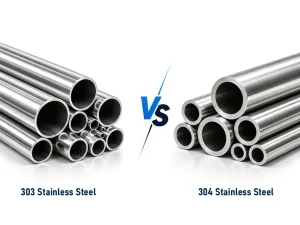
Both of these stainless steel grades are used in metal fabrication workshops. But 304 stainless steel is slightly more common than grade 303. Remember, each stainless steel grade offers different properties and advantages. 304 Stainless steel is known for its durability and corrosion resistance. It also has higher tensile strength, which is a significant advantage. As a result, fabricators use this grade to make a wide range of products.
These include enclosures, tanks, and kitchen equipment. Above all, 304 stainless steel is cost-effective, which is a significant advantage. CNC-machined parts of this material are very affordable. Interestingly, 303 stainless steel may not be very durable, but it is easier to machine. Manufacturers generally prefer 303 stainless steel for different projects.
This stainless steel contains a small amount of sulfur. This sulfur helps make it easier to machine. However, this material is not ideal for welding or laser cutting. Fabricators prefer 304 stainless steel when they need laser-cut or weldable materials. Both materials are equally good and are used in different industries. Overall, 304 stainless steel is more commonly used across fabrication shops.
Frequently Asked Questions
Is 303 stainless steel food grade?
No. 303 stainless steel is not food grade. It contains sulfur inclusions, which make it more prone to corrosion. That’s why it is NOT considered a safe option for food items. However, 304 stainless steel is food-safe because it does not contain sulfur inclusions.
Can 303 stainless steel be welded?
Yes. 303 stainless steel can be welded. However, the weld will be very weak and contain tiny pores. This joint will be less reliable and may fail at any time, especially under load.
Are SS 303 and 304 Magnetic?
Both of these stainless steel grades belong to the austenitic stainless steel family. So they are non-magnetic. This means they don’t attach to magnets.
Why is 304 more commonly used than 303?
304 stainless steel is more common because of its excellent corrosion resistance. Additionally, its visual appeal, surface finish, and durability make it more commonly used than grade 303.
Conclusion
In conclusion, stainless steel is a matchless material in many aspects. Its aesthetic appeal, shine, durability, and strength set it apart. However, choosing between 303 and 304 can be very confusing, especially if you don’t have the know-how. But you don’t need to be confused, as here is a quick verdict.
I recommend choosing the 304 stainless steel for its durability and corrosion resistance. Additionally, this material also has a shiny appearance, which makes it stand out. Above all, this stainless steel grade is affordable, making it a popular choice. However, if ease of machining is your priority, go with 303 stainless steel.
For any custom metal fabrication setup, both stainless steels matter. However, they may behave differently when undergoing different fabrication techniques. These include cutting, forming, welding, and so on. I recommend 304 for CNC machining, forming, and shaping. If you want better weldability and laser cutting, 304 stainless is best suited for you.
In short, the choice between these two stainless steel grades comes down to personal preference. So, I recommend that you know your product’s needs before making a final decision. It’s about ease of machining vs. durability, aesthetics, and low pricing. With these differences in mind, you’ll be able to make your final decision.