
Carbon steel is an important material in different metal fabrication workshops. This steel type is widely available, affordable, and offers decent strength. However, many people are unaware of carbon steel density. As you know, knowing a material’s density is crucial for selection, especially in fabrication.
If you choose materials without considering their density, you’re more likely to choose the wrong ones. These materials won’t meet expectations and will fail. As noted, carbon steel is a popular material, so knowing its density is essential to use it appropriately. In this article, I will discuss everything about the density of carbon steel and the factors that affect it. Let’s get started.
What is Density?

Density might sound complicated, and many might think of it as weight. Therefore, it is ideal to first understand the basics of density before discussing carbon steel.
Scientifically, density refers to mass per unit volume. It is the mass of an object or material contained in a specific volume. It is related to compactness and material weight. In simple terms, density indicates how packed a material is when placed in a specific space. A material with higher density takes up less space and will be heavier, and vice versa.
The formula to calculate the density of any material is as follows:
Density = Mass / Volume
The unit of density is kg/m³ or g/cm³. It is worth noting that kg/m³ is used in accordance with international standards. However, g/cm³ is more commonly used across industries. However, you can use either unit as per your preference, since they are interchangeable. Remember, density is not weight, but it gives an idea about the weight of different materials.
For example, dense materials generally occupy less space and have higher weight. On the other hand, materials with less density are lighter. Engineers consider density as the most important criterion when choosing materials. This parameter is even more important in the automotive and aerospace sectors.
Manufacturers in these industries want parts to be lightweight yet offer excellent strength. So they ensure their selected materials are low-density, which makes them feel lighter. Different materials have different densities, which affect their usability. Steel has a higher density: it will occupy less space but weigh more. In contrast, cotton or wood has a low density: it will occupy more space but be lighter.
What is the Density of Carbon Steel?
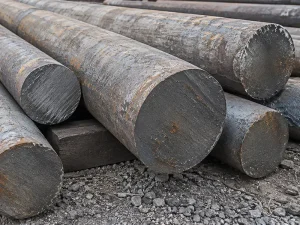
The density of carbon steel is 7850 kg/m³ or 7.85 g/cm³. Remember, 7850 kg/m³ is a larger unit and equals 7.85 g/cm³ when you convert the units. Engineers and manufacturers generally use g/cm³ as the unit for material density. That’s why 7.85 g/cm³ is more commonly used, but it can be converted into kg/m³.
As you know, carbon steel is not pure metal. Instead, it is an alloy composed of multiple alloying elements. These include iron, carbon, and manganese, and the list goes on. However, iron is the most important element, making up 98-99% of carbon steel. Carbon steel density primarily depends on the iron content, as iron is the most abundant component.
So even if you vary the carbon content, the density of carbon steel remains nearly the same. Interestingly, carbon steel has different types. These include low-carbon, medium-carbon, and high-carbon steel. These three types are based on differences in their carbon proportions. Despite their differences in carbon content, these types have nearly the same density.
The density of carbon steel is higher than that of many other materials. The examples include aluminum (2.70 g/cm³), plastics (1.20 g/cm³), wood (0.70 g/cm³), and so on. Due to its higher density, carbon steel is heavier and offers excellent strength. That’s the major reason this steel type is widely used in construction and many other projects. Remember, carbon steel is not the densest material: many other materials have more density than this steel type.
Factors That Affect the Density of Carbon Steel
The density of carbon steel is not constant and can vary with various factors. These factors can make carbon steel either denser or less dense. In the section below, I will explain these factors and how they affect the density of carbon steel.
1- Composition
Composition refers to the elements that make up carbon steel. As discussed above, carbon steel contains various alloying elements. Some alloy elements have higher atomic masses, while others have lower ones. If carbon steel contains heavier elements, its density will be higher. On the other hand, if it has elements with low atomic masses, its density will be reduced. Remember, the density of carbon steel is directly proportional to atomic mass. Lighter alloying elements reduce the weight of carbon steel, resulting in a lower density. In contrast, heavier elements increase the weight of carbon steel. This increases the density and weight of carbon steel.
2- Temperature
Density also depends on the temperature. As you know, when exposed to high temperatures, materials expand. This is also true for carbon steel. At high temperatures, carbon steel expands and occupies more space. However, the mass of carbon steel remains the same regardless of how high the temperature reaches. Increasing space results in low density. Remember, density is inversely proportional to the volume a material occupies. Similarly, if the temperature is very low, carbon steel contracts, taking up less space. When it occupies less space, its density increases slightly.
3- Manufacturing Process (Porosity and Internal Defects)
As you know, carbon steel undergoes different processing during its fabrication. These include casting, rolling, forging, and more. Small defects during these processes can affect the density of the carbon steel. For example, during casting, small (very tiny) air pockets can form within the carbon steel. These small air gaps increase the volume of the carbon steel. As a result, the density of carbon steel reduces due to an increase in volume. Any abnormality in the process that increases the volume will decrease the density of carbon steel.
Carbon Steel Density vs Other Steel Types
Carbon steel might sound like the densest material, but it is not! Undoubtedly, this steel type has a higher density, which makes it heavier and stronger. However, there are many other materials denser than this type of steel. In fact, some types of steel are denser than carbon steel. For example, stainless steel has a density of 8 g/cm³.
In the section below, a table compares the density of carbon steel with that of other materials.
| Material | Density (g/cm³) |
| Carbon Steel | 7.85 |
| Stainless Steel | 8.00 |
| Alloy Steel | 7.85 |
| Cast Iron | 7.20 |
| Aluminum | 2.70 |
| Copper | 8.96 |
| Brass | 8.50 |
| Titanium | 4.50 |
| Lead | 11.34 |
| Zinc | 7.14 |
Importance of Carbon Steel Density
Density is a very useful parameter. Engineers and manufacturers consider it carefully when designing or manufacturing any product. That’s because density determines different properties of carbon steel. In the section below, you’ll get some information on the importance of carbon steel.
1- Weight of Parts
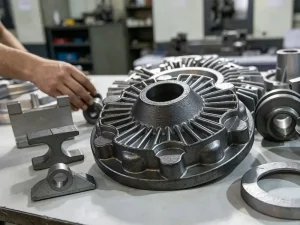
As I said above, density directly affects the weight of the materials. Suppose a material has a higher density, then its weight will also be higher. Similarly, low-density materials have lower weight. Manufacturers prefer low-density materials when they want to make a lightweight product. This is very useful in the aerospace industry. Engineers aim to reduce weight while maintaining part strength. Use of low-density materials in aerospace parts makes them lightweight.
2- Strength-to-Weight Ratio
Strength-to-weight ratio indicates how strong a material is against its weight. Materials that are strong but lightweight are considered ideal. The higher density of carbon steel makes it heavier and stronger. However, its weight is not too high, and it occupies less space. This property of carbon steel makes it widely used and popular.
3- Strength and Durability
The density of carbon steel also influences the strength and durability of different parts. The density of carbon steel is 7.85 g/cm³. This density is considerable, increasing the weight, strength, and durability of these materials. That’s why parts made with carbon steel are very durable and last for years. When durability is the main concern, many manufacturers prefer carbon steel due to its excellent strength.
4- Transportation & Handling
Higher density of carbon steel makes these materials very heavy. This is a drawback, especially for transportation and handling. Why? Transporting heavier materials can be difficult, especially in higher quantities. Logistics or shipping costs can also be higher for such heavier materials. People generally don’t mind higher shipping costs when they want more durable and stronger materials.
5- Ease of Machinability
Carbon steel is not one of the most difficult materials to cut, machine, or fabricate. The reason is that the density of carbon steel is not too high. So this material is a bit softer, which makes it easier to machine. During cutting, this material does not produce unwanted resistance or vibrations. Therefore, machining of carbon steel is easier. In fact, cutting tools don’t have to apply more force during the cutting and fabrication of this steel type.
6- Helps in Material Selection
Carbon steel density is highly helpful for the use of these materials for different projects. As you know, different materials have different requirements. Some projects need lightweight materials, while others need heavy-duty, robust ones. When they know the exact density of carbon steel, they can decide whether they need this material. Engineers choose different materials based on their densities.
Does Carbon Steel Desnity Affect is Fabrication?
As you know, metal fabrication is common, as it helps make different metal parts. Materials that are easier to fabricate are more valuable than others. Density directly affects how easily a material can be fabricated. This is because dense materials are typically thicker. So cutting, bending, and shaping such materials can be very difficult.
On the other hand, less dense materials are easier to cut and shape. Carbon steel has a density of 7850 kg/m³ or 7.85 g/cm³. This density range is neither too low nor too high. This means carbon steel is not very dense, and it can be cut, bent, and shaped. In fact, welding this material won’t be a big problem. Let’s compare carbon steel with other materials such as aluminum and stainless steel.
Aluminum is much less dense, having a density of 2.70g/cm³. Stainless steel, on the other hand, has a density of 8 g/cm³. When fabricating, cutting and shaping of aluminum is very easy. This is because it has a very low density. In contrast, stainless steel has a higher density, which makes fabrication more challenging.
Cutting tools can still cut it, but there is a risk of tool wear and overheating. Aluminum welding can be difficult and may require preheating. Carbon steel, with a moderate density, offers balanced properties. It can be cut, shaped, and welded easily. Some materials have very high density, such as lead. This material is much harder to fabricate than aluminum, carbon steel, and stainless steel.
Carbon Steel Grades and their Ease of Fabrication
Carbon steel has different types or grades. These types differ in carbon content. Differences in carbon content affect how easy they are to fabricate. Below is the table showing the carbon steel types and their carbon proportion:
| Carbon Steel Type | Carbon Content |
| Low-Carbon Steel | 0.05–0.25% |
| Medium-Carbon Steel | 0.25–0.60% |
| High-Carbon Steel | 0.60–1.00% |
| Ultra-High-Carbon Steel | 1.00–2.00% |
Low carbon steel has the lowest carbon content (around 0.05 to 0.25%). This carbon steel is soft and easy to fabricate. Cutting, shaping, and bending this type of carbon steel is less challenging. Cutting tools can work on it without overheating or overdoing it. On the other hand, high- and ultra-high-carbon steels have higher carbon content.
This higher carbon content makes them more rigid and harder. So fabricating these carbon steel types is more challenging. Cutting tools must apply more force to cut or bend them. Along with density, carbon content proportion also affects the ease of fabrication. More carbon content means harder materials. So, fabricating this harder carbon steel would be more challenging.
Frequently Asked Questions
What is the density of carbon steel in kg/m³?
The density of carbon steel is 7850 kg/m³. You can convert it into g/cm³. The density of carbon steel is 7.85 g/cm³. Both of these units are acceptable worldwide and interchangeable.
Is carbon steel 100% steel?
No. Carbon steel consists of around 98% iron, with the remaining 2% consisting of carbon and other alloying elements.
Is carbon steel very heavy?
No. Carbon steel has a density of 7.85 g/cm³, which is neither too high nor too low. Its moderate weight yields an excellent strength-to-weight ratio.
Can carbon steel rust?
Yes. Carbon steel is prone to both corrosion and rusting. Unlike stainless steel, it does not contain chromium, which could make it rust-resistant. This rusting is more common when this material is exposed to moisture or bad conditions.
Is carbon steel easy to fabricate because of its density?
Density is not the only reason carbon steel is easy to fabricate. It is one of the many reasons. Carbon steel is easy to fabricate due to its machinability, smooth cutting, and formability. Fabricated parts of this material are typically heavier and thicker because of its high density.
Conclusion
Let’s conclude: carbon steel is an important material used across various industries. You’ll see it in aerospace, automobile, construction, and many other industries. Why? That’s because this steel type offers many excellent properties. Among those, its strength-to-weight ratio is top-notch. However, when it comes to the density of carbon steel, many get confused.
Remember, knowing the density of carbon steel is of utmost importance. This parameter indicates how much mass of material is contained in a specific volume. Simply put, density is the relation of mass of material to the volume it occupies. In this article, I have discussed the density of carbon steel and the factors that affect it. In fact, you’ll also learn about the comparison of carbon steel density with other materials.