

Precision Sheet Metal Deep Drawing for Complex Components
Deep drawing is a process that uses stamping dies to create hollow, thin-walled, deep-cavity parts from sheet metal. It achieves seamless, smooth, and highly precise results. This process is widely used in products such as sinks, beverage cans, automotive parts, and appliance housings. RFS boasts advanced deep drawing equipment and extensive experience, processing a wide range of metal materials, including stainless steel, aluminum, and copper. We also provide high-quality, customized deep drawing services.

Precision Deep Drawing Forming
We use advanced deep drawing technology to transform sheet metal into complex, seamless, high-strength, lightweight, and consistent components. Our process ensures tight dimensional tolerances. Deep drawing technology is ideal for precision components in the automotive, aerospace, medical, and electronics industries.
Get a QuoteCustom Deep Drawing Die Design & Manufacturing
RFS offers professional deep drawing die design and manufacturing services tailored to your specific needs. Leveraging our sophisticated die technology, we can produce complex geometries and meet custom specifications. We ensure efficient production, minimize material waste, and optimize manufacturing costs.
Get a Quote

Deep Drawing Process Steps
In short, the deep drawing process involves five process steps.
- In region X, pure radial stretching occurs between the die and the blank holder, resulting in material thickening due to the induced hoop stress.
Some material thinning occurs as the metal bends and slides along the die profile (r2). - In region Y, initial stretching causes material thinning at the junction of the cup base and the sidewall. Failure to properly form the cup body is often due to tensile failure in this critical area.
- Some material thinning occurs as the metal bends and moves along the punch profile radius (r1).
- In region Z, the material stretches and slides at the punch nose.
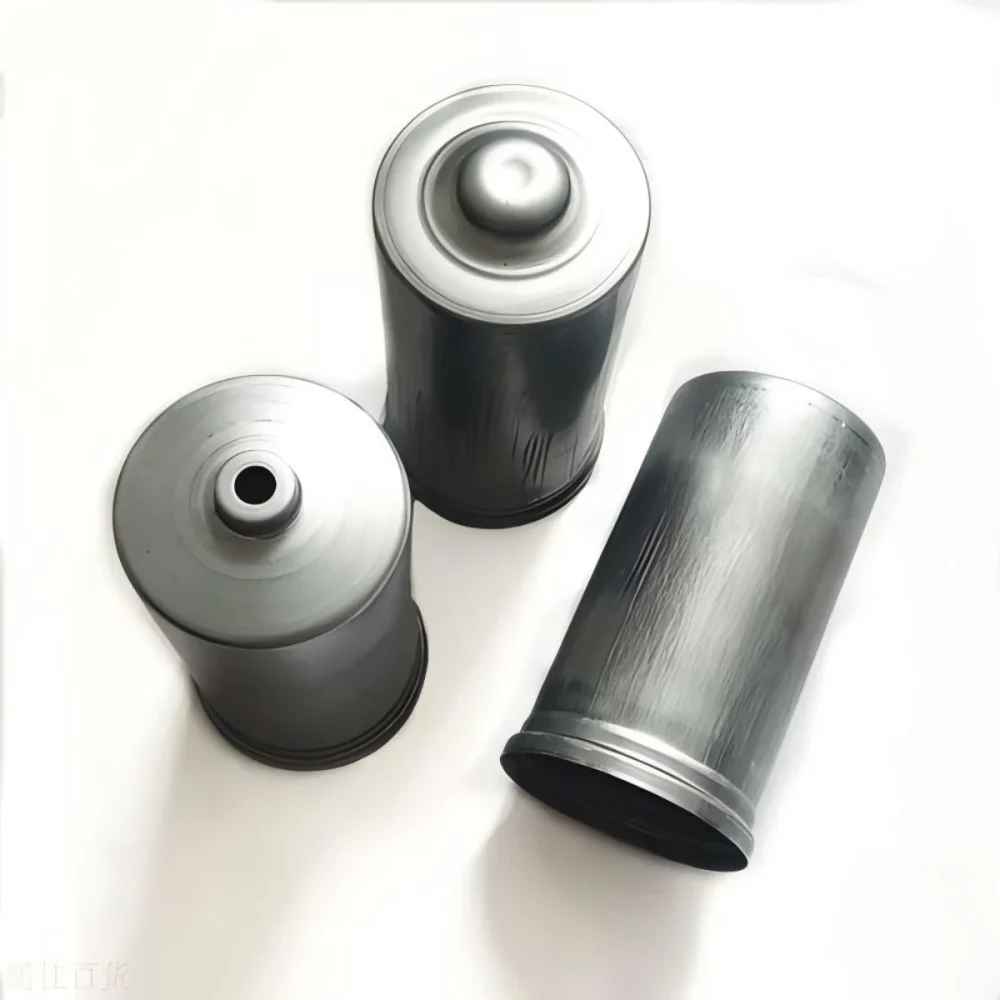
Picture Display of Deep Drawing Process Part
Our custom deep drawing service enables us to produce a variety of complex shapes and high-precision metal parts according to customer needs. Whether it’s different sizes, thicknesses, or diverse structural designs, we can provide professional processing solutions. Below are some detailed images of the parts:



Materials for Sheet Metal Deep Drawing
Sheet metal deep drawing is compatible with a wide range of materials, including:
- Stainless steel: such as 304 and 316. Stainless steel is relatively strong and can be used in humid environments.
- Aluminum: such as 1100, 5052, and 6061. Aluminum is lightweight and easily formable. It is suitable for parts requiring both strength and weight.
- Carbon steel: such as SPCC and SPHC. Carbon steel is very strong and suitable for parts requiring high strength.
- Brass: such as C260 and C280. It offers excellent formability, an attractive appearance, and electrical conductivity.
- Copper: such as C110. It exhibits excellent thermal and electrical conductivity, making it suitable for use in electronic components.
We can process more than just these materials; these are just some of the commonly used deep-draw materials. If you have a specific material requirement, please contact us.

Why Choose RFS for Deep Drawing Manufacturing Service?

Plan ahead
If RFS discovers any design flaws in a customer’s part before production begins, we will inform the customer directly. This prevents tearing or wrinkling during the drawing process and prevents unusable parts.

Various materials
RFS has processed a wide range of materials, including stainless steel, cold-rolled steel, and aluminum. We have a deep understanding of the reaction mechanisms of different materials and the potential problems that may arise during the deep drawing process.

Extensive experience
Deep-drawn parts are prone to uneven wall thickness and springback. RFS has encountered similar issues before, but our professional team of designers has successfully addressed them through consultation.

Sincere attitude
We will directly inform customers whether we can produce the part. RFS will not force production beyond our capabilities. In addition, when faced with complex designs, I will discuss effective alternatives with customers or solve them one by one in different production stages.
Sheet Metal Deep Drawing FAQs
Stamping is suitable for creating flat or shallow parts. Deep drawing can form metal into a deeper, hollower shape in a single operation. Furthermore, deep drawing does not create gaps.
Deep drawing is suitable for materials such as stainless steel, aluminum, carbon steel, copper, and brass. The choice of raw material depends on the customer’s desired performance requirements for the final part, such as conductivity, heat resistance, or lightweighting.
The depth depends on the material, thickness, and design. In many cases, the draw depth may exceed the diameter of the part. For very deep parts, we may need to form them in stages to avoid tearing.
Yes, RFS can custom-make parts based on your drawings. You can also select and customize the raw material and surface finish of the part.
The deep drawing process is suitable for any application requiring a strong, seamless metal component. Common areas include medical devices, home appliances, electronics, and automotive.