
Steel is one of the most widely used materials across various manufacturing industries. Its excellent durability, performance, and strength make it stand out. However, there are different types of steel, making it more versatile. This guide on steel will cover its properties, composition, and types.
Today, metal fabrication services would be incomplete without steel. The reason is that there is no material as inexpensive and as strong as steel. You’ll see steel parts and products in your homes, too. In this article, I will discuss steel, its key properties, and types. You’ll learn why this alloy is getting so much attention. So, let’s get started.
What is Steel?

First things first – Steel is not an independent metal. Instead, it is an alloy consisting of multiple alloy elements. These include iron, carbon, nickel, manganese, chromium, and so on. The composition of steel alloy can vary depending on the types of steel. This material can be shaped, formed, and welded, ensuring its easier fabrication.
Steel is actually derived from iron. As you know, iron is a soft material, yet it has been used for centuries. Because of its softness, iron parts were not very durable. As a result, engineers began mixing carbon and other materials with iron to increase its strength. However, this was a costly process that could not be used on a large scale.
Later in 1856, Henry Bessemer invented a process for making steel. This process was cheaper and used to produce steel at a large scale. This is when steel production became common, enabling its greater use. Manufacturers initially used steel to make railway tracks because of its greater durability.
Over time, engineers refined and developed different types by varying the proportions of elements. For example, when they add over 10.5% chromium, this creates stainless steel. Manufacturers use stainless steel to make corrosion-resistant parts and products. Similarly, engineers adjust the proportions to achieve the desired properties of steel.
Composition of Steel
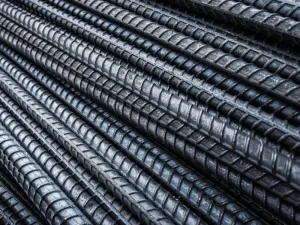
As I said above, steel is made of different alloy elements. The base of this alloy is iron, which makes up almost 95% of the material. Apart from iron, carbon, chromium, nickel, and many other elements are used. Each element gives steel unique properties. This results in the desired performance across different steel products.
Below is the table showing the chemical composition of steel:
| Element in Steel | Proportion (%) |
| Iron | Around 95% |
| Carbon | 0.02% – 2.1% (depending on type of steel) |
| Manganese | 0.3% – 2.0% |
| Silicon | 0.1% – 0.5% |
| Chromium | 0% – 18% (depending types of steel) |
| Nickel | 0% – 8% |
| Molybdenum | 0% – 1% |
Each of the above-mentioned elements gives the steel unique properties. Engineers add specific elements when they need custom properties in steel. For example, they increase the carbon content to make the steel harder. The reason is that carbon increases the hardness of these materials. Similarly, they add manganese when toughness is their key priority.
The presence of higher manganese in steel increases its toughness and wear resistance. Chromium reacts with oxygen to form chromium oxide layers. This layer protects steel from corrosion. Engineers use higher chromium levels to make steel corrosion-resistant when making marine products. In other words, each element that contributes to steel has its specific properties.
Types of Steel
Steel is available in different types. Each of these types offers unique strength, durability, and other properties. Manufacturers use them as per their key properties. In the section below, I will discuss these types of steel.
1- Mild Steel
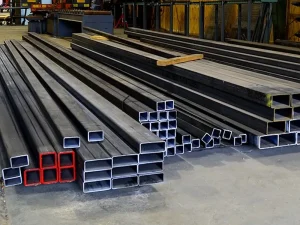
Mild steel, also called low-carbon steel, has a very low carbon content, ranging from 0.05% to 0.25%. Since it has low carbon, its hardness and strength are compromised. However, lower hardness makes this steel type more flexible, softer, and easier to cut. In fact, manufacturers generally prefer mild steel when they want steel to be bent easily. I don’t recommend these steel types if you want strength, wear, and corrosion resistance. People generally choose mild steel primarily because of its lower cost.
2- Alloy Steel
As the name suggests, this steel type contains many alloying elements. These elements can include chromium, nickel, manganese, and more. The properties of these elements influence the performance and overall properties of alloy steel. When it comes to strength, alloy steel is a better option than mild steel. In alloy steel, engineers can alter the properties by increasing the proportion of elements. For example, they increase chromium to improve the corrosion resistance of alloy steel. Similarly, when they add more manganese, the toughness of this steel gets better.
3- Carbon Steel
Carbon steel is one of the most common types used in almost all manufacturing processes. Its properties vary depending on the proportion of carbon. In terms of composition, iron and carbon are the primary elements that make up carbon steel. If carbon steel has a higher carbon content, it would be harder, and vice versa. Carbon steel is further divided into four categories, each differing in its strength. Below is a table showing types of carbon steel and their carbon proportion and strength:
| Type of Carbon Steel | Carbon Content (%) | Hardness Level |
| Low Carbon Steel (Mild Steel) | 0.05% – 0.25% | Low |
| Medium Carbon Steel | 0.3% – 0.6% | Medium |
| High Carbon Steel | 0.6% – 1.0% | High |
| Ultra-High Carbon Steel | 1.0% – 2.1% | Very High |
4- Stainless Steel
You’ll see many marine products made of stainless steel. Why? The reason is that this steel type performs excellently against corrosion. The excellent corrosion resistance of this material is due to its chromium content. Stainless steel contains over 10.5% of chromium in its composition. This chromium forms chromium oxide layers when it reacts with oxygen.
These layers shield the stainless steel, protecting it from further corrosion. Different grades of stainless steel differ in their composition. For example, 304 stainless steel contains about 20% chromium. On the other hand, 316 stainless steel contains about 18% chromium. Due to differences in composition, the strength and other properties of these steel types vary.
5- Free Cutting Steel
Steel is generally not ideal for machining. It produces large chips, which makes them less suitable for fabrication with advanced machines. So, engineers change the composition of steel by adding small amounts of sulfur or lead. These additional elements help improve the machining ability of this steel.
Free-cutting steel produces smaller chips due to these additional elements. This is advantageous because cutting can be done smoothly on these materials without excessive force. The ease of cutting these steel types makes them cost-effective in the long run. However, elements such as lead or sulfur can affect steel’s ductility, which can be a drawback.
Properties of Steel
Steel is preferred primarily due to its multiple favorable properties. Its versatility gives it an edge over many other materials. Let’s explore the key properties of steel that make it useful.
1- Strength and Hardness
Steel offers excellent strength and hardness, which make it a very useful material. As you know, parts made with strong material last longer and vice versa. The tensile strength of steel types varies between 250 MPa and around 2000 MPa, depending on the type. As I said earlier, some steel types have higher carbon content, known as high-carbon steel. These steels offer higher hardness, which makes them excellent for wear resistance. Steel with lower carbon (mild steel) is softer, which can fit in case you want less hardness.
2- Toughness & Load Bearing Ability
Steel has excellent toughness and load-bearing ability. When exposed to stress or shock, this material does not crack. It can absorb shock and remain in good condition. This makes steel an ideal material for making bridges and railway tracks. In bridges, this material maintains its structural integrity even under extreme loads. The toughness of steel mainly comes from the presence of manganese. This material has higher toughness, which imparts this property to steel.
3- Temperature Resistance
Steel has excellent heat resistance, which is another significant advantage. Remember, temperature resistance varies in different types of steel. For example, carbon steel can withstand a maximum temperature of around 500 degrees Celsius. On the other hand, the performance of alloy steel and stainless steel is even better. They can remain in good condition even if the temperature goes up to 1000 degrees Celsius. This makes steel a suitable material for parts used at high temperatures.
4- Corrosion Resistance
As previously discussed, many parts of boats and other marine equipment are made of steel. This is because steel offers excellent corrosion resistance, especially stainless steel. This material has improved corrosion resistance due to its chromium content. Even if you use stainless steel parts in moist or salty conditions, they will still resist corrosion. It is worth noting that stainless steel chromium layers are self-healing. This means you don’t have to apply any other coating when using stainless steel to make any product.
5- Machinability & Weldability
Machinability and weldability are essential parameters in metal fabrication services. Interestingly, steel is an excellent option in this regard. It can be cut, shaped, and formed easily with regular cutting tools. Tools won’t wear out or overheat when fabricating these materials. Those steels with higher carbon content are slightly difficult to cut due to their hardness.
However, they can still be cut without any issue. Additionally, steel offers optimal weldability. This means you can create strong welds on them when joining two steel pieces. Steel with higher carbon content can lead to cracking. However, with the right approach, welders can make the welds even on those harder steel types.
6- Recyclable & Cost-Effective
One of steel’s standout properties is its recyclability. This means it can be used and reused repeatedly. In fact, when recycled and remanufactured, steel does not lose its quality or strength. Interestingly, steel production heavily depends on the scraps. This scrap of steel is recycled and reused in construction and other industries.
Above all, its recycling does not require much energy. Because of its recyclability, steel is generally cheaper than many other materials. You get excellent performance and durability at affordable pricing. In fact, some steel types, i.e., mild steel, are available at exceptionally low prices. This makes steel widely useful, even for projects that require cost-cutting.
Applications of Steel
One of the most prominent uses of steel is in construction and automobiles. Almost all modern bridges and tunnels rely heavily on steel. Steel used in construction provides strength, ensuring buildings remain functional. Interestingly, modern steel structure buildings are also becoming popular. Their beams, columns, trusses, panels, etc., are made of galvanized steel.
Apart from construction, steel also finds its applications in the automotive industry. For example, door panels of cars and other vehicles are made of these materials. Their use in marine industries and in the production of household items is also popular. Stainless steel utensils are part of almost every home. The reason is that this material offers excellent heat resistance, making it suitable for making utensils.
Below is the table giving popular applications of steel:
| Industry | Applications of Steel |
| Construction | Buildings, bridges, rebar, structural frames |
| Automotive | Car bodies, chassis and engine part |
| Transportation | Railway tracks & aircraft components |
| Manufacturing | Machines, tools, gears, industrial equipment |
| Marine | Ship hulls, offshore platforms, marine structures |
| Oil & Gas | Drilling rigs, pipelines, storage tanks |
| Household | Kitchen utensils and furniture |
Frequently Asked Questions
Is steel basically iron?
No. Steel is not pure iron. However, iron is the base metal, accounting for over 95% of this alloy. Steel also contains other alloy elements, such as carbon, chromium, and manganese, among others.
Is steel natural or made?
Steel is not natural. It is an alloy made by mixing different elements. These include iron, carbon, chromium, and more. Steel is produced through the Bessemer process.
Can we run out of steel?
No. We cannot run out of steel because it is recyclable. Manufacturers can produce new steel from scrap steel through recycling. Additionally, iron is a major material used in its making, which is abundant in the Earth’s crust. This ensures we will always have steel and never run out.
Is steel resistant to corrosion?
Yes. Steel types such as stainless steel are highly corrosion-resistant. Manufacturers add a coating or use the galvanization process to make steel corrosion-resistant. This coating, or galvanization, is part of steel post-processing. These are used only when strong corrosion resistance is required.
Conclusion
In conclusion, steel is an excellent addition to the list of materials used in manufacturing industries. Its excellent durability, strength, and hardness make it stand out. Steel parts are not only corrosion-resistant but also exhibit excellent toughness. Due to this, this material is used in the construction sector to make bridges, as it withstands high loads.
It is worth noting that steel is not pure metal – instead, it is an alloy. Why? That’s because it consists of different alloy elements that make up its composition and structure. In this article, I have discussed the basics of steel. This article will help you understand what steel should be part of your next projects.