
Aluminum is one of the most commonly used materials in the world. You can find aluminum-made products in your household items to large industrial parts. But sometimes, aluminum alone is not enough to handle the complexity and needs of certain projects. That’s where engineers mix some other elements with it to enhance its properties. This combination gives rise to different aluminum alloys.
Each of those aluminum alloys has its unique strengths and weaknesses. That’s why you have to be very careful while choosing them. But if you are new to handling aluminum, these alloys might confuse you. However, you need not worry! In this guide, I will discuss some of the most widely used aluminum alloys and their differences in the simplest way possible. So let’s get started.
Different Alloys of Aluminum & Basic Differences Between Them
The strange thing about aluminum alloys is that they might look the same at first glance. So if you are a beginner, you are likely to get confused and make the wrong selection. To better understand, I will discuss different aluminum alloys and their key differences here.
1- 1100 Aluminum (Pure Aluminum Alloy, 1000 Series)

The first, most common, and oldest aluminum alloy is 1100. It contains about 99% pure aluminum, meaning it has very few other elements. Due to its higher aluminum content, this alloy is usually soft and flexible. Flexibility means it is very easy to work with and turn into different shapes. For example, you can bend, roll, or form it into different designs without the risk of breaking. Also, the pure aluminum alloy is highly corrosion-resistant. Why?
Because it contains most of the aluminum that develops an oxide layer when exposed to air or moisture. This layer acts as a protective shield, preventing further corrosion of the alloy surface. But remember, along with all these properties, 1100 aluminum is not strong. It cannot carry heavy loads or handle high pressure. Because of this, you cannot use it in construction or heavy machinery. Instead, you will find 1100 aluminum in kitchen utensils, aluminum foil, and storage containers.
2- 2024 Aluminum (2000 Series Alloy)
2024 aluminum is basically a strong and high-performance alloy. If we look at its composition, it contains copper as its main added element. Because of this, it is much stronger than pure aluminum, like 1100. In fact, it is one of the most used alloys in industries where high strength is of utmost importance. But its higher strength does make it heavier. Instead, due to the aluminum content, it is still lightweight yet strong.
It can handle heavy loads and stress without easily breaking. But the higher copper content causes problems with corrosion resistance. Unlike 1100, 2024 aluminum can corrode when exposed to moisture. To resolve this issue, you can apply a special coating to its surface. Also, the higher strength of 2024 aluminum makes it challenging to work with and fabricate.
3- 3003 Aluminum (3000 Series Alloy)
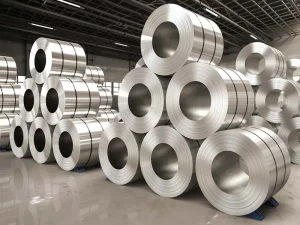
Now, it comes to 3003 aluminum alloy, where manganese is the main alloying element. This small addition of manganese makes 3003 stronger than 1100. But still, it is easier to work with and fabricate due to the manganese content. How? Actually, 3003 has a balance of properties better than any other alloy. No doubt, 3003 is not extremely strong, but it is still strong enough for many general uses. At the same time, it has excellent corrosion resistance.
That means 3003 can handle moisture very well, so you can use it even in outdoor conditions. Also, its higher formability allows manufacturers to bend, roll, stamp, or shape it into different forms. This is because 3003 is still relatively soft compared to high-strength alloys. However, in terms of mechanical behavior, 3003 aluminum is not heat-treatable. It means heating processes cannot increase its strength. Instead, you have to use alternative methods, such as cold working (e.g., rolling or pressing), to increase its strength.
4- 5052 Aluminum (5000 Series, Marine Grade Alloy)
5052 aluminum is a strong and highly practical alloy that contains magnesium. When magnesium is added to aluminum, it strengthens it by a process called solid solution strengthening. Here, the magnesium atoms sit inside the aluminum structure and block movement inside the metal. This directly enhances the hardness and strength of the aluminum. Due to this strength, 5052 aluminum has good fatigue resistance. This means it can handle repeated loading and vibration without cracking easily.
That’s why you can find it in transportation and marine structures, where materials are constantly in motion. Moreover, 5052 aluminum also performs very well in harsh chemical environments, unlike 1100, which is limited to water. It forms a natural protective oxide layer on its surface. That layer acts like a shield against corrosion and also against chemicals. But as I said above, it has higher magnesium, which makes it harder. Unlike 3003, its machinability can be difficult with standard cutting and shearing tools.
5- 6061 Aluminum (6000 Series)
Another common aluminum alloy is 6061, which is very versatile. If you look at its composition, you will find it contains a mix of magnesium, silicon, and aluminum. Both of these additional elements enhance several properties of aluminum. How? For example, it is heat-treatable, unlike all the above alloys, due to silicon, which enhances its strength.
When heated and then cooled in a controlled manner (as in the T6 condition), very small particles form within the metal. These particles block internal movement, making the 6061 alloy very strong. So this process also allows us to control its strength based on the application. Moreover, 6061 exhibits a clean, predictable cutting behavior. It means you can cut it with certain tools without risking material waste.
Quick Highlight: High-strength alloys like 7075 are stronger and harder. They can fail suddenly (brittle failure). But 6061 has a very interesting balance between strength and fracture behavior. It shows gradual deformation before breaking, giving warning signs. This makes it safer and more reliable in structures such as bridges, frames, and load-bearing components.
6- 7075 Aluminum (7000 Series)
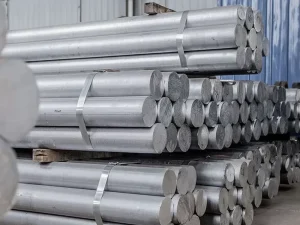
7075 aluminum is one of the strongest and most reliable aluminum alloys available. It belongs to the 7000 series, where zinc is the main alloying element. But along with zinc, there are also small amounts of magnesium and copper. Due to this unique composition, 7075 achieves very high strength and durability. Sometimes engineers compare it to certain steels in terms of durability. But instead of having such high strength, 7075 is still lightweight. That is why it is widely used in aerospace and defense, where lightweight yet strong materials are crucial.
Moreover, unlike low-grade alloys, 7075 is heat-treatable, allowing you to increase its hardness. But one major limitation of 7075 aluminum is its lower corrosion resistance compared to 5052, 1100, and 3003 alloys. Moisture and salty water can easily corrode it. That’s why engineers apply protective coatings to enhance this corrosion resistance. Also, 7075 is very strong but less forgiving. Unlike 6061, it does not deform much before breaking. It means it can fail more suddenly under extreme stress.
How You Can Identify Aluminum Alloys?
Identifying aluminum alloys is straightforward. As you can see, there are four numbers in each alloy. But these numbers are not random; they tell you about the type of elements added and the family (series) of the alloy. Let me explain. The first digit is very important, as it indicates the main group or series of the alloy. If it is 1000 (like 1100), it means almost pure aluminum.
Similarly, in case it is 2000, it contains copper. If it is 5000, it contains magnesium. In case it is 6000, it has magnesium and silicon. And if it is 7000, it contains zinc. So this first number quickly tells you what kind of alloy it is. Now, the second digit indicates whether the alloy has been modified or changed from its original form. Suppose that if an aluminum alloy has a second digit of 0, it means it has not been modified and retains most of its original form.
In most aluminum alloys, this digit is usually zero, so you often don’t need to worry about it much. Now, the last digits help you identify the specific alloy grade. These two digits do not change the main type, but they help to separate different alloys within the same series. For example, 3003 and 3004 are both 3000 series. Right? But they have slightly different properties.
How to Choose the Aluminum Alloys That Are Best For You
Among all aluminum alloy specifications, you can see that they vary widely in many respects. That’s why you have to choose the one that exactly matches your project needs. But if you are new to aluminum alloys, it might feel tricky. That’s why, to make things clear for you, here are some factors you must consider when choosing an aluminum alloy.
- Your Project Requirements: First, understand what your project needs. Is it about handling heavy weights, lightweights, outdoor conditions, and water or chemicals? So if you need to handle regular use, you don’t need high-grade alloys. You can choose 1100 or 2024. However, for heavy-duty applications, you will need high-strength aluminum alloys like 6061 and 7075.
- Strength & Durability Requirement: Aluminum alloys have different strength levels. Right? If you need low strength but high flexibility, alloys like 1100 or 3003 are suitable. If you need medium strength with balance, 6061 is a good choice. But if you need very high strength, like in aircraft or military use, then 7075 is used.
- Environment & Corrosion Resistance: The environment where you will use the alloy matters a lot. If your alloy will be exposed to water, moisture, or salt, you should choose 5052 or 5083, which work well in such conditions. But if corrosion resistance is not your concern and you will use the alloy indoors, you can choose 2024 or 7075.
- Workability & Manufacturing: Not all aluminum alloys behave the same during manufacturing. So you have to decide whether your project requires cutting, bending, welding, or shaping. If yes, you have to choose 3003 and 5052, which are very easy to form and bend. However, 6061 and 7075 are harder to work with and not easy to weld. For their fabrication, you will need specialized tools.
- Cost vs Performance: Lastly, when choosing the aluminum alloy, cost plays a major role. Some alloys, like 3003, are cost-effective but slightly compromised in strength. So if you have a tight budget, you can choose it for general use. However, premium alloys like 7075 and 6061 are more expensive due to their high strength and reliability. For critical projects, you must choose them.
Conclusion
Aluminum has become part of our everyday products and large industrial tools. But it does not come alone; it is alloyed with several other metals. All those alloys have different properties, strengths, and limitations. From the outside, they might look alike. But when you look deeper, you will find that each contains different alloying elements, giving them unique properties.
To better understand, I have discussed some common aluminum alloys. All of them have different corrosion resistance, workability, strength levels, and costs. The best choice among those depends on where and how they will be used. If you understand the basic differences between alloys, it becomes much easier to select the right one for any project.