
Welding is an important technique used in the metalworking and fabrication industries. Interestingly, there are various welding methods available. Among these, MIG welding is an important type, yet many are unaware of it. This guide on MIG welding is essential for both fabricators and customers.
It is worth noting that welding methods differ in their heat output. MIG welding relies on an electric arc to produce heat that melts the pieces. These pieces then fuse, forming a strong joint known as a weld. In this article, I will discuss everything about MIG welding, its working and prominent advantages. Let’s get started.
What is MIG Welding?

Before discussing working and advantages, let’s look at the basics of MIG welding.
MIG welding, also known as Metal Inert Gas welding (GMAW), is a welding process. This welding method uses an electric arc and metal electrodes. The arc produced through electricity offers high heat. This heat melts the metal pieces and fuses them. This fusing creates strong joints or welds which last for years. This method uses an inert gas, such as argon, to protect the weld from air contamination.
MIG welding uses a welding gun, wire (electrode) and shielding gas, i.e., argon. As you know, welding is not something new. In fact, it has been in use for many decades for welding different metallic pieces. In the early 1900s, stick welding was the most popular method. It had many drawbacks and limitations. In 1948, H.E. Kennedy was the first person to work and invent MIG welding.
This method eliminated the issue of weld contamination caused by exposure to air. As I mentioned above, MIG welding uses inert gas shielding. These include argon, carbon dioxide and so on. During welding, this gas is applied to the weld spot. As a result, there is no air contamination on the weld surface. Remember, if there were air contamination, the weld would have been weaker.
Moreover, this welding technique is very versatile, which has significant advantages. The reason is that MIG welding can be used for a wide range of materials. These include ferrous and non-ferrous metals, such as aluminium, magnesium, and so on. This welding method is faster, precise and can weld both thin and thicker metal pieces. In fact, you can use MIG welding to create welds on even the most heat-sensitive metallic materials.
How Does MIG Welding Work?
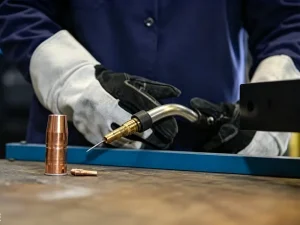
The working of MIG welding is very straightforward. This method uses an arc to melt the metal pieces, fusing them. In the section below, I will discuss the MIG Welding Process in four steps.
1- Electric Arc Formation & Wire Feeding
First, the MIG welding machines are connected to an external power source. Without it, this welding method does not work. Once the machines are connected to power, a welding gun is used to form an arc. For this, a welding gun is used to bring the metal pieces to be welded close together.
The operator then feeds the wire from the welding gun. This wire coming out of the welding gun has an electric current. This current comes from the welding machines. The welder then brings a gun with a wire tip outside, close to the metal piece. The current present in the wire tip tries to complete the electric circuit between the wire and the metal piece to be welded. As a result, an electric arc forms at a high temperature.
2- Melting of Metal & Weld Pool Formation
The electric arc produced between the wire electrodes and the metal pieces is very strong. It can produce very high heat of around 5,400°F. Such high heat is more than enough to melt the metal pieces. Remember, the welder’s welding gun directs the arc and feed wire to the right place. As a result, the arc melts the metal pieces and the feed wire at the weld location.
Due to the high temperature, the metal pieces melt, forming a weld pool. This weld pool consists of molten liquid that cools and solidifies. After solidification, the weld becomes very strong and holds the two pieces together. The welder moves the welding and can make a long weld or joint. During this process, the gun keeps feeding wire (an electrode), creating an arc and melting the metal pieces.
3- Shielding Gas Protection & Welding Movement
As I said earlier, air contamination is a major problem welders face. For example, gases in the air, such as oxygen and nitrogen, react with the weld pool, contaminating it. This contamination reduces weld strength, making it weaker and less durable. In MIG welding, the welding gun releases inert gases, such as argon or carbon dioxide, around the weld pool.
These gases protect the weld pool by preventing oxygen and other contaminants from reaching it. As a result, the weld remains safe from air contamination. The welders keep welding the pieces by moving the gun along the joint. The gun will feed the wire, providing electricity and melting the piece in one joint. This means shielding gas emissions on the weld pool won’t affect welding speed.
Quick Highlight: There are different types of shielding gas available for use. You can even use 100% argon as shielding gas, especially when welding non-ferrous metals. However, you can mix argon with other gases to use for ferrous metals. The shielding gas you should use depends on the type of materials you’re welding. Remember, these shielding gases differ in performance and pricing.
4- Cooling & Solidification of Weld
Remember, weld pools are generally molten. Once the weld is made, welders remove the welding gun from the joint. This means no more electric arc occurs at the welding point, which reduces the temperature. As a result, the weld pool cools and solidifies, becoming hard and strong. Interestingly, there is no need to use any artificial ways to cool or solidify the weld. Instead, molten weld pools naturally solidify due to air. Once solidified, the two pieces fuse and become very strong, permanently attaching to each other.
Advantages of MIG Welding
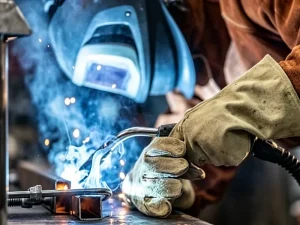
MIG welding is considered superior to many other welding techniques. Why? That’s due to its effectiveness, versatility and speed. There are many advantages of MIG welding, which make it popular. Below is the section where I will discuss the prominent advantages of this welding method.
1- High Welding Speed than Other Methods
One of the major advantages of MIG welding is its speed. As discussed above, welding guns keep feeding wire during the welding process. This wire is fed and melted along with metal pieces to make the weld. There is no need to stop before feeding the wire, which makes this process very efficient. Since the welder does not stop during welding, he can create welds that look uniform and consistent. Many traditional methods are way slower than MIG welding.
2- Compatible with Materials with Different Thickness
Traditional welding techniques are compatible with a wide range of materials and thicknesses. However, MIG welding allows you to create strong joints on both thicker and thinner materials. How? The reason is that weld machines allow welders to adjust different parameters. These include voltage, current, wire feed rates and so on. When welding thin materials, you can use lower power on the welding machine and vice versa.
3- Clean and Smooth Welds
Mig welding is known for producing clean, strong welds. You won’t notice any deterioration or porosity on the weld. The reason is that this method uses shielding gas to protect the weld pool from air contamination. When there is no air contamination, the weld becomes smooth and of exceptional quality. That’s the main reason welds made with MIG welding machines generally don’t require post-processing.
4- Versatile for Different Metals
In the early days, stick welding was popular. However, it was limited to certain materials and could not make high-quality welds on non-ferrous metals. That’s where the MIG welding becomes very useful. This welding type can create smooth, high-quality welds on a wide range of materials. These include aluminium, stainless steel, magnesium and the list goes on. However, you’ll have to use different shielding gases to create durable welds on different materials.
5- High Productivity at Large Workshops
Undoubtedly, large metal fabrication workshops heavily rely on welding. However, traditional methods are slow, which affects the efficiency of these workshops. On the other hand, MIG welding is very fast and can produce strong welds. The reason is that a single-weld gun feeds the wire, providing both arc and shielding gas. As a result, creating a weld becomes easier in a single pass, without repeated stops or breaks. This can enable metal fabrication work to operate at a rapid pace and improve productivity.
6- Cost-Effective & Easy to Use
MIG welding is perceived as expensive, yet it offers significant value. However, the reality is different, as this welding method is very cost-effective. There is no need for extensive labour or expert operators, which saves you on salaries. Additionally, these welding methods help weld quickly, reducing electricity bills. How? Because the machine will run for less time and consume less power during operations. Above all, MIG welding machines are easy to use. Someone with mild experience can easily make a strong weld using MIG welding.
Frequently Asked Questions
What are the advantages of MIG Welding?
MIG welding has become popular due to its many advantages. Some of them are as follows:
- MIG welding is cost-effective
- MIG welding creates a strong weld
- This method creates a strong weld with minimal spatter and slag.
- It creates the weld quickly and makes welds on a wide range of materials (both thick and thin).
Can stainless steel be welded in MIG welding?
Yes. Stainless steel can be welded using MIG welding. For this method, you’ll use stainless steel wire as an electrode. Additionally, you should use a combination of argon and carbon dioxide as the shielding gas. This will prevent air contamination on the weld, making it look strong.
Is MIG welding good for beginners?
Yes. MIG welding is a very simple technique that anyone can use. Even if you’re a beginner, you’ll be able to make a weld using MIG welding with a little know-how. MIG welding machines are very simple to operate, which is a significant advantage.
Can you MIG weld without gas?
Yes – Mig welding can make a weld without gas. However, the weld quality will be poor due to air contamination. Shielding gas protects the weld from oxygen and nitrogen, preventing air contamination. I recommend you always use argon or carbon dioxide as the shielding gas when MIG welding.
Conclusion
In conclusion, MIG welding is one of the most practical welding options available. What makes this method unique is its use of shielding gas. Operators use the welding gun, which releases the shielding gas on the weld pool. This gas protects the weld from contamination by oxygen or nitrogen, ensuring weld quality.
Interestingly, all the welding methods differ in how they produce heat. For example, laser welding uses a laser beam to produce heat. However, this MIG welding relies on an electric arc to heat and melt the metal pieces. This melting and fusing of pieces is what makes a strong joint or weld.