
Can I use 100% argon for MIG welding? That’s the question every beginner asks. Different gases are used during metal sheet welding processes. These shielding gases play a key role in producing welds that are strong, durable, and contamination-free.
A few of them are mixtures of gases, while others are pure gases. Argon is used either straight or mixed with other gases. But the question is: can you use 100% pure argon gas for MIG welding? The answer is both YES & No, depending on the type of material being welded. This article will discuss the use of 100% argon during MIG welding.
Overview of MIG Welding & Shielding Gases

Before discussing the primary question, let’s first understand what shielding gases and MIG welding are.
MIG welding is a more common and simpler type of welding. It uses an electrically charged metal wire to create a weld on the metal surface. In this method, a continuous wire electrode is automatically fed and melted into the joint., creating a weld. It is used to weld a wide range of materials, including steel and aluminum.
During MIG welding, the shielding gas is applied over the weld spot. This shielding gas is beneficial because it prevents contamination of the weld surface. Remember, during welding, the metal and wire melt to fuse. During this, if oxygen or nitrogen from the air reaches the molten weld pool, contamination issues can occur.
The weld may weaken and break due to reactions with gases, such as oxygen and nitrogen. That’s why the welding torch releases shielding gas around the weld pool (weld location). This shielding gas covers the weld area and prevents those gases from reaching the weld. As a result, there is no contamination, and the weld remains safe.
Different shielding gases are used during welding. Those include argon, carbon dioxide (CO₂), and the list goes on. A mixture of argon and carbon dioxide is also used in some cases. Argon is inert, preventing reactions at the weld surface. In simple terms, shielding gas protects the newly formed weld from contamination.
Can I Use 100% Argon for MIG Welding?
Yes, but it depends on the type of metal being welded. In some cases, using 100% argon (pure argon) is fine, and you won’t face any issues. For example, when welding aluminum non-ferrous materials, you can use pure argon. However, if you are welding steel or similar metal pieces, using 100% argon is not recommended.
Why does 100% argon not work on mild steel or carbon steel? The reason is that the arc becomes unstable, creates big runny blobs, massive spatter, and almost no penetration. Pure argon simply cannot support proper short-circuit transfer on steel. On aluminum and non-ferrous metals, however, pure argon is perfect. That’s because it gives a smooth, stable spray transfer and beautiful, clean welds.
When welding steel, you should not use 100% argon shielding gas. Aluminum is a non-ferrous metal and doesn’t require high heat to melt. In such a case, you can use pure argon as a shielding gas. During welding, the argon will make the arc softer and wider, but this softer arc will still be strong enough to melt the wire and aluminum.
The reason is that aluminum requires less heat to melt, and it also requires an electrically charged wire. 100% argon enables spray transfer on aluminum. This results in smooth, continuous droplet flow for clean, professional welds. This is why pros always use pure argon for aluminum MIG.
What happens if I use 100% Argon for MIG Welding?
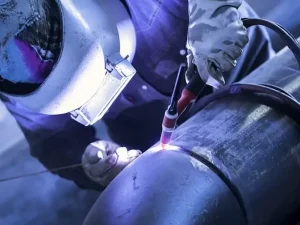
I recommend using pure argon during MIG welding of aluminum. However, using pure argon for ferrous materials is not recommended. If you do this, you’ll face some consequences in the form of weak welds. In the section below, I’ll discuss some potential issues when using pure argon.
1- Softer Arc with Shallow Penetration
As I mentioned earlier, using pure argon as a shielding gas affects the arc intensity. Argon reduces the arc’s intensity, making it softer and spreading its heat. As a result, less heat reaches the materials, resulting in shallow penetration. You’ll see a lack of penetration, but there will be no strong weld on the internal side. Why? That’s because the electric arc does not reach or penetrate deeper.
2- Spatter & Bad Welding Appearance
Pure argon gas widens the electric field and spreads its contents. Using a mixture of argon and CO₂ would make the arc more focused and intense. Due to the presence of argon, the arc spreads more, resulting in spatter and a larger weld spot. In addition, the heat-affected zone will be larger when using pure argon. This significantly affects the weld’s appearance, making it look poor. This is common when MIG welding steel with pure argon shielding gas.
3- Weak Weld with Less Durability
The soft electric arc cannot penetrate deep into the material. The weld from the upper side looks very solid. However, the internal side of the joint remains weak because of incomplete fusion. So, the weld spot becomes less reliable. When exposed to load or force, this weld can break, causing your part to fail. This is more common when MIG welding steel with 100% argon shielding gas.
4- Weld with Less Load-Bearing Capability Even on Thick Metals
It is generally believed that welding on thicker metal pieces is very strong. Those welded metal pieces can withstand high loads with ease. But there comes a twist when you use pure argon for welding. The weld remains weaker, even in thick sections. Remember, there is less arc penetration, resulting in a weaker weld on the internal side. This weaker weld reduces the load-bearing capacity of the joined piece.
5- Slower Welding on Steel
Using 100% argon can slow the MIG welding process. In fact, this drawback is more pronounced when welding materials like steel. Remember, argon gas reduces the intensity of the electric arc and spreads its heat. So welders have to keep the arc on longer to heat and melt the metal pieces. Materials like steel can take more time to melt and then fuse with a softer arc. However, using a gas mixture for shielding can speed up MIG welding.
When Should I Use 100% Argon for MIG Welding?
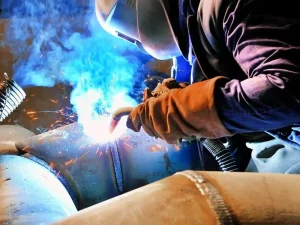
When Should I Use 100% Argon for MIG Welding?
Use 100% argon for:
- Aluminum & non-ferrous metals (IDEAL choice)
- When no other option exists for steel (temporary only)
Using pure argon should be reserved for when you’re out of options. For example, if you work on a welding project until late and your shielding gas runs out, leaving you with only pure argon. If you continue welding, you can use pure argon, which is also suitable only for non-ferrous materials. You can use 100% argon, but only when you have no other option. I recommend using a mixture of argon and carbon dioxide during MIG welding.
This gas mixture is beneficial during MIG welding. How? First, this gas mixture does not affect the electric intensity and does not make it very soft. Additionally, the presence of carbon dioxide increases the arc’s penetration, allowing it to reach deeper into the weld. In short, using a mixture of argon and carbon dioxide is the best option. However, if you have no options left, then going with pure argon is the only way forward.
Gas Options for Different MIG Applications
You should use a mixture of two gases as shielding gases. Those gases are argon (inert) and carbon dioxide. Argon is non-reactive and provides a perfect weld cover, preventing contamination. Carbon dioxide ensures the electric arc has excellent penetration power. But what should be the proportion of argon and carbon dioxide when used for shielding gases?
A 75% argon and 25% carbon dioxide mixture will do most of the task. Here is a table showing different gas options for MIG welding.
| MIG Application | Recommended Shielding Gas |
| Mild Steel Welding | 75% Argon / 25% CO₂ |
| Structural Steel | 75% Argon / 25% CO₂ |
| Aluminum Welding | 100% Argon |
| Thin Sheet Metal | Argon-rich mix (90–95% Argon) |
| Automotive Body Panels | 80% Argon / 20% CO₂ |
| Decorative Steel Work | 80% Argon / 20% CO₂ |
| General MIG Work (Steel) | 75% Argon / 25% CO₂ |
| Stainless Steel | 90-98% Argon / 2-10% CO₂ |
| Thick Aluminum (>1/4″) | 75% Argon / 25% Helium |
| Silicon Bronze (brazing) | 100% Argon |
Conclusion
MIG welding is an essential technique in metal fabrication. It helps create a strong bond (weld) between different metal pieces, joining them together. But if not done correctly, MIG welding may not achieve its purpose, resulting in a weaker weld.
One thing that makes welding effective is the use of the right shielding gas. Using 100% argon may not be the best option in many cases. You can use it when MIG welding aluminum, but it is not suitable for steel or other ferrous materials. Instead, I recommend using a mixture of two gases, i.e., argon and carbon dioxide, for the best results.