
Metal sheet fabrication is popular across different industries. It involves different fabrication processes to make metal sheet parts. However, aerospace sheet metal fabrication is used in the aerospace sector and is specific in its manufacturing. This aerospace sheet metal fabrication 101 guide will discuss this manufacturing process.
Aerospace sheet metal fabrication is similar to conventional metal fabrication. However, it uses lightweight yet strong materials to produce only aircraft parts and components. In this article, I will discuss everything about the metal sheet fabrication used only in the aerospace sector. You’ll also learn about the processes involved in this fabrication.
What is Aerospace Sheet Metal Fabrication?

I’ll start with the basics of the aerospace sheet metal fabrication process. I will aim to help you understand everything about this fabrication, even if you’re a newbie.
Aerospace sheet fabrication is a modified type of conventional metal fabrication. It involves different metal fabrication techniques to fabricate metal sheets. This manufacturing process only makes parts and components specific to the aerospace sector. It uses materials suitable for making airplane parts and components.
This machining process focuses on tight precision, with a zero margin of error. As I mentioned earlier, aerospace sheet fabrication produces components used in aircraft. If any machined aircraft part is imperfect, it would pose serious safety issues for the aircraft. As you know, those bigger airplanes fly too high where the pressure is too high. So, this fabrication uses a metal sheet of the strongest material and accurate parts.
It is noteworthy that conventional metal fabrication can use any materials. There is no strict monitoring of material selection. However, the aerospace sheet-fabrication process is particular. It focuses on fabricating particular materials, such as aluminum, titanium, and nickel alloys. These materials are both lightweight and strong.
Have you ever seen aircraft doors, wings, and other panels? Those are made of sheets of the materials mentioned above. Due to the strength of materials, those sheets used in doors or wings remain durable. Even at high pressure, these components perform excellently. Conventional metal fabrication cannot produce parts of such strength. As a result, aerospace metal sheet fabrication is gaining popularity.
Popular Methods in the Aerospace Sheet Metal Fabrication
As I said earlier, aerospace metal sheet fabrication involves different processes. Each of these processes helps cut, bend, weld, and fabricate other materials. Manufacturers use these processes and operations to produce various aircraft parts. In the section below, I will explain the processes involved in aerospace metal fabrication.
1- Metal Sheet Cutting
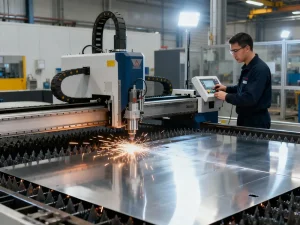
Metal sheet cutting is very commonly used in aerospace metal fabrication. This process helps cut large sheets into smaller parts. Later, these parts are welded together to form various aircraft components. Manufacturers use different cutting techniques during this process. Some of those techniques include:
- Plasma cutting
- Water jet cutting
- Laser-based cutting
- CNC Machining for more precise cuts
The use of each of these cutting techniques is very specific. Remember, laser cutting uses a laser beam, while water jet cutting uses a high-pressure water stream. All aerospace fabrication processes use one or more of these cutting methods. It is noteworthy that modern cutting machines come with a CNC system. As a result, they create cuts with precision and accuracy.
2- Metal Sheet Forming Method
Once the parts are cut, they are of random shape. Right? However, the aircraft parts have different shapes and curves. Manufacturers use forming methods to create those curves or bends. Remember, accuracy is critical during this forming and bending process. Therefore, aerospace fabrication uses high-end press machines. Those include:
- CNC Press Brakes
- Deep Drawing Machines
- Stretch Forming Machines
- Hydroforming Press Machines
These machines use computerized systems and create bends on metal sheets with 100% precision. As a result, manufacturers receive aerospace parts with precise curves and shapes. Remember, conventional press brakes are not used in this fabrication. Why? That’s because those press brakes don’t have computerized systems. In aerospace machining, all the machines are based on advanced computerized systems.
3- Metal Sheet Punching
Punching is an essential process in the fabrication of aerospace metal sheets. It helps in creating holes and cutouts on the surface of metal sheets. This allows nuts, bolts, and fasteners to be installed in aerospace parts. Punching involves using a dedicated punch and die. The material is placed on the die, and a punch descends, pressing the sheet against the die.
This pressing creates a hole in the metal sheets. It is noteworthy that aerospace fabrication uses advanced punching machines. Those include:
- CNC turret punch presses
- Hydraulic punching machines
The advantage of using such high-end punch machines is that they create a hole with a tighter tolerance. The chance of errors or inconsistencies is nearly zero with these machines. Remember, aerospace parts are used in aircraft. They must be very precise and made with tight tolerances. These punch machines ensure those holes are of the right size and dimension. You won’t see manual punch machines used in aerospace metal sheet fabrication.
4- Metal Sheet Welding

Metal sheet welding is one of the most important processes used in aerospace fabrication. Why? The reason is that it helps join metal pieces (sheets) and create a strong weld. Remember, welding techniques involve melting the metal pieces. These pieces fuse and form a strong weld at the points where they join.
Aerospace metal fabrication involves creating a firm weld. This welding can withstand vibrations, stress, and even uneven pressure. The standard technique used for welding involves:
- Laser Welding
- MIG (Metal Inert Gas) welding
- TIG (Tungsten Inert Gas) welding
Modern aerospace fabrication uses high-end, CNC-controlled or robotic welding machines. These machines create welds with precision and accuracy. There will be a minimal heat-affected zone at the weld location. Technically, TIG welding is most popular in the aerospace sector. The welding technique used depends on the specific metal sheet material.
5- Finishing or Post-Processing Methods
Metal sheets used in the aerospace industry are not smooth. They have surface roughness, which can affect their look and feel. Additionally, aircraft edges are generally post-processed. Each part made by aerospace fabrication undergoes different processing. Those processes can include:
- Alodine coating
- Heat treatment
- Powder Coating
- Surface polishing
- Anodizing & Plating
The purpose of these finishing methods is to improve the look, feel, and strength of aircraft parts. For example, painting increases the visual appeal and corrosion resistance of aircraft parts. Similarly, alodine coating also provides strength to the metal sheet parts. Heat treatment improves the toughness and strength of parts used in the aerospace sector. The finishing method is not an option; it must be followed in aerospace metal sheet fabrication.
Common Materials in Aerospace Sheet Metal Fabrication
The aerospace industry has specific requirements for material selection. Those requirements include that the material used must be strong but very lightweight. Generally, stronger materials are robust and heavy. This requirement excludes many materials that have ideal strength. Their higher weight makes them less suitable for making aircraft parts.
In the section below, I will discuss some popular materials that are commonly used in the aerospace industry:
1- Titanium
Titanium is the most widely used material in the aerospace industry. Why? The reason is that it is a robust material, but very light. In fact, it is 45% lighter than aluminum, its strength is way higher than that of aluminum and its alloys.
Manufacturers use it in aerospace fabrication and make aircraft engines and landing gear parts. The higher strength of titanium poses a drawback to cutting. Manufacturers use CNC machines to cut it with precision. The traditional cutting method won’t create precise cuts due to its higher hardness. The cutting tools can slip off or become worn due to this hardness.
2- Aluminum Alloys
The use of pure aluminum is less common in aerospace metal fabrication. However, its alloys are widely used in the manufacture of aircraft parts and components. Aluminum alloyed with elements such as copper, zinc, etc., offers better performance. The presence of copper increases the strength and durability of aluminum.
Copper also improves corrosion resistance, which is essential for aircraft parts. Various aluminum alloys are used in the aerospace industry. Some of those include 6061, 7075, and 2024. Those aircraft parts that require extreme strength are made with 7075 aluminum alloy. Remember, aluminum is less expensive than titanium, which makes it stand out in the aerospace sector.
3- Nickel-based Alloys
Both aluminum and titanium offer excellent performance and strength. Right? However, both of these materials come with compromised heat resistance. This makes them unfit for use in parts that are exposed to high temperatures. That’s where the nickel alloys come in. These alloys offer exceptional heat resistance and withstand extreme temperatures.
Additionally, they (alloys) don’t deteriorate even when the temperature changes rapidly from high to low or from low to high. This makes these nickel alloys ideal for making aircraft engines and turbine parts. It is noteworthy that these nickel alloys are not inexpensive and are used strategically. You won’t see nickel alloys everywhere in aircraft. Instead, these alloys make only part of the jets withstand high temperatures during flight.
4- Stainless Steel
Stainless steel is also used in the fabrication of aerospace metal sheets. Manufacturers use it when they need aircraft parts with better toughness and fatigue resistance. Remember, airplanes can go for years and still see vibration. So, those parts need to be tough and fatigue-resistant for better durability.
This material is wisely used to make fasteners and other aircraft engine parts. Remember, stainless steel has different types, but 304 and 316 are very popular. These two types offer excellent corrosion resistance, making them a good option for the aerospace industry. However, the strength of stainless steel is not as good as that of nickel alloys.
5- Brass & Copper Alloy
The safety of aircraft, including helicopters, depends on their electronics. An electronic failure can result in a deadly disaster. Right? That’s why manufacturers use both brass and copper alloys to make aircraft electronic components.
Copper alloys processed through aerospace fabrication are used to make wires. Remember, both brass and copper alloys come with excellent electrical and thermal conductivity. This makes them an ideal option for use in electronics or parts where heat dissipation is key. Remember, these materials are not used in aircraft body parts, such as doors or panels.
Common Aircraft Parts Made by Aerospace Sheet Metal Fabrication
Are there any aircraft parts not made by aerospace metal sheet fabrication?
Interestingly, airplane parts are made of different sheets of different materials. Those sheets undergo cutting, forming, punching, welding, and other fabrication processes. As a result, manufacturers make aircraft parts and assemble them to make aircraft. From structural components to engines and exterior parts, everything relies on this fabrication.
Here is a table showing different aircraft parts made by this fabrication process:
| Category | Common Parts |
| Structural Components | Fuselage panels, wings, bulkheads, tail sections |
| Engine Parts | Engine cowlings, exhaust ducts, brackets |
| Interior Components | Floor panels, seat frames, wall panels |
| Control Systems | Hydraulic housings, hinges, landing gear parts |
| Small Precision Parts | Fasteners, clips, fittings, fairings |
Frequently Asked Questions
What is fabrication in aerospace?
Aerospace fabrication is a set of processes used to produce aircraft parts and components. Those processes involve cutting, forming (bending), punching, and welding. Aerospace sheet fabrication uses these processes and makes high-quality aircraft-grade parts.
What metal is used in aerospace?
There is not one single metal used in aerospace. There are many names, including titanium, aluminum alloys, copper alloys, stainless, and so on. Each aircraft part has different material requirements. Various materials are used to make multiple parts of an aircraft.
What are the three main fabrication techniques in Aerospace manufacturing?
Three primary fabrication techniques used in aerospace manufacturing involve:
- Cutting of metal sheets
- Forming (bending) to make a curved shape of pieces
- Welding to join those pieces and make aircraft parts ready to use.
Conclusion
In short, aerospace sheet metal fabrication helps create precise parts for aircraft and jets. We cannot use conventional metal fabrication as it does not ensure the precision we need in the aerospace sector. Remember, small mistakes or imperfections can lead to defective aircraft parts.
If those parts are used in aircraft, they can cause serious issues. Additionally, aerospace metal fabrication only uses specific materials. Those materials offer excellent strength despite their very lightweight nature. In this article, I explained everything about aerospace metal fabrication and the materials used in this process.