
Undoubtedly, aluminum is one of the most widely used metals in industry today. It is lightweight, strong, and corrosion-resistant, making it ideal for many projects. Among its wide range of alloys, 6061-T6 and 5052-H32 are the two most widely used. But when it comes to choosing between them, many people ask: 6061-T6 vs 5052-H32 aluminum, which one is the best?
In fact, 6061-T6 and 5052-H32 are both high-quality aluminum alloys. But their chemical composition, strength, and other properties differ in many aspects. These differences make them suitable for specific projects. If you are new to aluminum, choosing the right one can be confusing. But worry not! In this guide, I will break down the main distinctions between these two aluminum alloys. By the end, you will know which one is best suited to your project. So let’s get started!
Basic Rundown of 6061-T6 and 5052-H32 Aluminum

6061-T6 aluminum is a strong, heat-treated alloy made with magnesium and silicon. The “6061” represents the alloy series, which means this aluminum is mixed with magnesium and silicon. However, “T6” refers to the heat treatment process the metal undergoes.
6061-T6 aluminum is a widely used aluminum grade due to its strength. Actually, it gains this strength through its manufacturing process. How? 6061-T6 aluminum is made by first melting pure aluminum. After melting, it is mixed with magnesium and silicon to create the alloy. This mixture is then cast into solid shapes and later rolled or formed into sheets and bars.
After shaping, it undergoes a T6 heat treatment. In this process, the alloy is heated to a high temperature, allowing its internal structure to become soft and uniform. Right after heating, the metal is quickly cooled in water or air. This locks the structure in place. Then the metal is kept at a warm, controlled temperature for several hours. This step slowly hardens the aluminum (aging). Together, these steps make the aluminum much
stronger, harder, and more durable.
5052-H32 aluminum is a corrosion-resistant alloy with a high magnesium content. The “5052” represents the alloy type, which contains a high magnesium content. The “H32” means the alloy is strain-hardened and lightly annealed, not heat-treated. This type of aluminum alloy is both strong and flexible.
This combination of strength and flexibility is achieved through its manufacturing process. Basically, first, pure aluminum is melted. Then, magnesium is added to it. After the metal solidifies, it is rolled, pressed, or squeezed at room temperature. This process is called cold working. After cold working, the metal becomes too hard. It is heated a bit to soften it and make it more flexible to work with. This small heating step gives the metal the label H32.
6061-T6 vs 5052-H32 Aluminum: Key Differences!
6061-T6 and 5052-H32 aluminum may appear similar at first glance. However, their properties and applications are quite different. So let’s explore the main differences that set these two aluminum alloys apart.
1- Chemical Composition
Chemical composition refers to the elements present in aluminum alloys and their proportion. This is one of the primary differences between 6061-T6 and 5052-H32 aluminum. In 6061-T6 aluminum, the main alloying elements are magnesium and silicon. It also contains small amounts of copper and chromium. This combination makes 6061-T6 very strong and stiff. Let’s look at its main compositional elements and their proportion in the table below.
| Element | Percentage (%) |
| Aluminum | 97.9 – 99.0 |
| Magnesium | 0.8 – 1.2 |
| Silicon | 0.4 – 0.8 |
| Copper | 0.15 – 0.4 |
| Chromium | 0.04 – 0.35 |
| Zinc | Around 0.25 |
| Manganese | Around 0.15 |
On the other hand, 5052-H32 aluminum has a higher magnesium content. But it has a very low amount of copper and silicon. This higher magnesium content makes 5052-H32 corrosion-resistant. However, 5052-H32 has less copper and silicon, so it is not as strong as 6061-T6. Still, due to H32 treatment, it is flexible. Here is table showing the composition of 5052-H32 aluminum.
| Element | Percentage (%) |
| Aluminum | 97.25 – 98.25 |
| Magnesium | 2.2 – 2.8 |
| Silicon | 0.25 max |
| Copper | 0.1 max |
| Chromium | 0.15 – 0.35 |
| Zinc | 0.1 max |
| Manganese | 0.1 max |
2- Density & Weight
Density is another difference you should consider when choosing between 6061-T6 and 5052-H32 aluminum. It refers to the amount of material per unit volume. Simply put, it tells us how much material occupies a given volume. 6061-T6 aluminum has a density of about 2.70 g/cm³. This higher density makes this aluminum type stronger.
However, it also increases the weight of 6061-T6 aluminum, which makes its handling challenging. On the flip side, 5052-H32 aluminum has a slightly lower density of about 2.68 g/cm³. It means this 5052-H32 aluminum is marginally stronger but lightweight. You should use this aluminum when you prefer lightweight, highly flexible materials. Moreover, its lighter weight makes it easier to handle and transport 5052-H32 aluminum over long distances.
3- Strength & Load Capacity
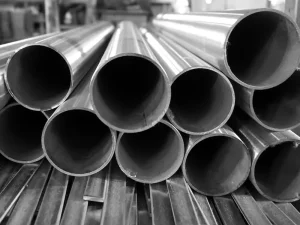
Strength and load capacity refer to how much pressure a metal can withstand before it breaks. This is another key difference between 5052-H32 and 6061-T6 aluminum. For instance, 6061-T6 aluminum is robust and rugged. Why? This is because of its heat treatment (T6) and special mix of magnesium, silicon, and copper, which makes it rigid. It means that 6061-T6 aluminum can hold heavy weights and resist bending or breaking.
On the contrary, 5052-H32 aluminum is moderately strong but highly flexible. It is not heat-treated. That’s why its strength mainly comes from strain hardening (cold working) and higher magnesium content. Due to its higher magnesium content, 5052-H32 aluminum can carry as much weight as 6061-T6. But its flexibility is helpful, allowing it to bend or stretch slightly without cracking.
4- Corrosion Resistance
Corrosion resistance is another main distinction between 5052-H32 and 6061-T6 aluminum. 6061-T6 aluminum comes with moderate corrosion resistance. However, you should not use it in harsh or very moist conditions. The reason is that this aluminum doesn’t contain any elements that make it rust-resistant or chemically resistant. In typical indoor or dry environments, 6061-T6 aluminum can last a long time.
However, in marine or highly corrosive environments, it may need extra protection. 5052-H32 aluminum, on the other hand, is highly corrosion-resistant. Why? The reason is that it has a higher magnesium content, which forms a protective oxide layer on its surface when exposed to moisture. This layer acts as a shield, protecting the 5052-H32 aluminum from corrosion. You should choose 5052-H32 aluminum for marine and outdoor conditions. This type can easily withstand humidity and salty conditions.
5- Formability and Flexibility
Formability refers to a metal’s ease of bending, curving, or stretching into different shapes. However, flexibility refers to a metal’s ability to absorb stress and return to its original position. Both 5052-H32 and 6061-T6 aluminum vary in this regard. For instance, 6061-T6 aluminum is strong and rigid, which makes it less flexible and harder to bend. Its T6 heat treatment increases strength but reduces the ability to form or shape complex shapes.
If you try to bend 6061-T6 aluminum, it will quickly break. 5052-H32 aluminum, in contrast, is highly flexible and easy to form. It can be bent, rolled, or shaped into different forms without cracking. This is because it is strain-hardened rather than heat-treated. This cold treatment makes it more flexible and easier to shape into intricate forms. So, designers often choose 5052-H32 when they need custom shapes and smooth curves.
6- Machinability & Workability
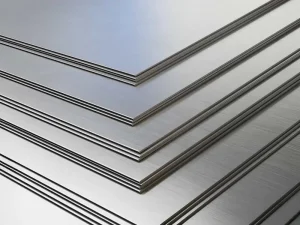
Machinability is the ease with which a metal can be cut, drilled, milled, or shaped using machines. However, workability refers to how easily metal can be formed or worked by hand or tools. Both of these factors differentiate 5052-H32 and 6061-T6 aluminum. For example, 6061-T6 aluminum has excellent machinability. This excellent machinability comes from its chemical composition.
Silicon makes the metal strong and also allows metal fabrication tools to remove material efficiently. However, the T6 heat treatment makes the metal very hard and rigid. This rigidity improves its load-bearing capacity but reduces workability. If you try to bend it sharply or shape it by hand, it can crack or break.
In contrast, 5052-H32 aluminum is known for its excellent workability. Unlike 6061-T6, it is not heat-treated, so it remains softer and more flexible. This flexibility is mainly due to its high magnesium content and strain-hardening process (H32 temper). Because of this, 5052-H32 can be manually rolled, curved, and bent.
However, when it comes to machinability (drilling or milling), 5052-H32 is slightly tough to machine. Its softness sometimes causes the tools to create rough edges or burrs. Despite this, it can still be drilled, cut, and shaped with standard machines. But for welding, 5052-H32 is excellent. Because it is soft and flexible, it can absorb heat without cracking. This makes it perfect for metal fabrication projects.
7- Common Applications
As I said earlier, both 5052-H32 and 6061-T6 aluminum have different chemical compositions. As a result, they are suited to specific applications. Here is a table showing the application comparison of these aluminum alloys:
| 6061-T6 Applications | 5052-H32 Applications |
| Aerospace parts | Marine parts |
| Auto frames | Fuel tanks |
| Machinery | Containers |
| Structures | Roofing |
| Supports | Outdoor gear |
| Heavy tools | Sheet metal |
8- Cost & Availability
Cost and availability also differentiate 5052-H32 and 6061-T6 aluminum. 6061-T6 aluminum is more expensive than 5052-H32. The reason is that it has a complex production process that includes heat treatment (T6). This production process for this aluminum alloy is time-consuming and energy-intensive, increasing costs. Remember, 6061-T6 contains copper and silicon, which are not readily available and are costly.
On the flip side, 5052-H32 aluminum is a less expensive option. Why? That’s because it doesn’t require heat treatment, which saves on energy costs. Moreover, 5052-H32 aluminum has a simple composition with a higher magnesium content. Magnesium used in this alloy is readily available, and the alloy is easy to shape due to its flexibility. All these factors make 5052-H32 aluminum a cost-effective option.
Conclusion
6061-T6 and 5052-H32 aluminum are both useful alloys, right? However, they differ in several important aspects that I have discussed in this article. For example, 6061-T6 is strong, rigid, and heavier. However, this aluminum alloy is slightly more costly due to its manufacturing process. On the other hand, 5052-H32 is flexible, corrosion-resistant, and easy to shape. This makes this alloy an ideal option for outdoor and marine applications. In simple words, if you need strength and load-bearing capacity, go for 6061-T6. If you need flexibility and corrosion resistance, choose 5052-H32.