
Sheet metal fabrication means bending and shaping thin metal sheets to create valuable products. You can see its results everywhere, from cars and airplanes to buildings and even household items. To do this work properly, workers rely on specific tools. There are 10 sheet metal fabrication tools that are very common to use.
Metal fabrication is impossible without these tools and machines. Remember, the right tools make the process faster and more precise. Some of these tools are very expensive and are only used by large-scale manufacturers. However, there are some tools that are cheaper, and everyone can buy them. In the article below, I will explain all those fabrication tools.
10 Sheet Metal Fabrication Tools
Sheet metal work involves shaping and finishing metal sheets. To do these jobs well, workers use both machines and hand tools. Here are ten of the most common tools you will find in workshops and factories.
1- Sheet Metal Shears (Guillotine Shears)

Shears are simple but handy tools in sheet metal work. They cut large metal sheets into smaller pieces. Guillotine shears have a straight blade that comes down on the sheet to make a clean and straight cut. Small workshops often use manual or foot-operated shears. Bigger factories usually have powered hydraulic shears that can cut thicker metal accurately.
Shears are fast and do not make sparks or rough edges. When selecting a shear, consider the metal thickness and cut length, and verify whether it is manual or powered. Safety guards are also essential to keep workers safe. Using the right shear can save time and reduce material waste. Regular maintenance keeps the blades sharp and the cuts precise.
2- Press Brake Machines
The press brake is a key tool for bending sheet metal into angles or complex shapes. It works by pressing the metal between a punch and a die to form the desired shape. This machine is widely used in the construction and automotive industries. Modern CNC press brakes allow for exact bends and repeatable results, making them perfect for jobs that need precision.
When choosing a press brake, consider its tonnage and control system. Safety features like laser guards or two-hand controls are critical because the machine works with high force. Using the proper tooling helps make clean bends without harming the metal. Regular maintenance helps to keep the machine safe and ensures accurate bending every time.
3- Turret Punch Press
A turret punch press is a machine used to make holes or shapes in sheet metal. It has a round turret that holds different punches and dies. This allows workers to create multiple hole sizes and patterns without manually changing tools. These machines are helpful for tasks such as building ventilation holes or engraving on metal.
CNC turret punches are even better because they follow a program to make exact patterns. When choosing a turret punch press, consider its strength, the thickness of metal it can cut, and the size of the turret. Using the right machine saves time and makes the holes neat. When purchasing equipment, look for trusted metal fabrication brands in the USA for quality and safety.
4- Laser Cutting Machines
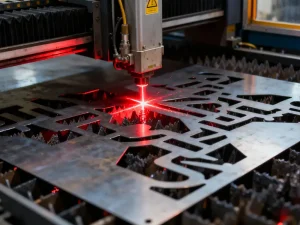
Laser cutting machines use a focused beam of light to cut sheet metal very precisely. They can make fine cuts and complex shapes, often needing little extra finishing. These machines are used in industries where accuracy is essential, like aerospace and electronics. They work well with metals like aluminum and stainless steel.
Although they are expensive initially, laser cutters save time and can handle detailed designs. This makes them one of the most valuable tools in sheet metal work. Laser cutters are also very safe when used correctly. Many workshops offer complete metal fabrication services, including laser cutting and welding.
5- Plasma Cutters
Plasma cutters use a jet of ionized gas, called plasma, to cut through metals that conduct electricity. They are faster and cheaper than laser machines, so many workshops and job sites use them. These machines can cut many metals, including steel, aluminum, brass, and copper. They are especially good at cutting thicker sheets.
When picking a plasma cutter, consider how thick it can cut and the power it needs. Extra tools like roller guides or drag shields can help make cleaner and more accurate cuts. Plasma cutters are also easy to move and set up, which makes them great for jobs outside the main workshop. It’s essential to match the tool with the correct metal fabrication materials to ensure precise cuts.
6- Welding Machines
Welding is essential for joining sheet metal pieces together. Different methods are used depending on the job:
- MIG welding is fast and works well for thicker metals.
- TIG welding gives precise and clean results on thin materials.
- Stick welding is versatile and works well outdoors.
A good fabrication shop usually has more than one type of welder to handle different projects. Safety gear, such as helmets, gloves, and shields, is essential. Regular maintenance of welding machines keeps them working safely and efficiently. Learning proper welding techniques helps produce cleaner joints properly.
The laser welding machines are also becoming popular. The environment of automation (CNC system) makes these machines exceptionally precise. They create a weld using a laser beam at the exact spot. These machines have laser heads that move and direct laser beams to make strong welds. Remember, laser welding is more expensive and requires skilled operators.
7- Angle Grinders

Angle grinders are handheld tools used for cutting, grinding, and polishing metal. They help shape edges, remove rough spots, and smooth welds. You can use different discs depending on the job, like cutting wheels or wire brushes. Angle grinders are great for finishing work and making metal look clean and professional.
Safety is essential. Always use the guards and wear eye protection when using an angle grinder. Regularly checking the discs and tools also keeps them safe. Angle grinders are light and easy to use, making them suitable for both small workshops and large factories. If you take care of them, they can last a long time and do many jobs.
8- Sheet Metal Rollers
Sheet metal rollers, also called plate rollers, are machines that bend metal sheets into curves or cylinders. They are often used to make tanks, pipes, or curved panels. Rollers can be manual or motorized. They can also be hydraulic. Manual rollers are suitable for small workshops, whereas hydraulic rollers are better suited for large jobs.
When choosing a roller, check its length, the metal thickness it can bend, and any extra tools like cone benders. Regular maintenance and proper use keep rollers working smoothly and safely. Operators should follow safety guidelines and work carefully to make smooth, even curves every time. Understanding the various metal fabrication types helps you choose the right tools for each task.
9- Band Saw
A band saw is a popular cutting tool used to cut thicker metal pieces. This tool has a long, continuous, and sharp blade. One edge of this blade has teeth that help cut the materials. This band saw is known for its lower heat generation during the fabrication of metal pieces. Due to this, this tool is suitable for cutting materials that are sensitive to heat.
It helps prevent warping of the materials. Some cutting tools are limited to curved cuts. However, these band saws can cut both curved and straight cuts, and are more versatile. There are two types of band saws, one horizontal and the other vertical. A horizontal band saw is generally used when no intricate shape is required.
It can cut thicker or bundles of thin materials. On the other hand, a vertical band saw is more precise and cuts the material with excellent precision. I consider a band saw a suitable option when you need an ideal finish and precision. Additionally, they are also compatible with thicker materials and cut with efficiency.
10- Drills
Metal fabrication seems impossible without drills. As you know, creating holes for fasteners and fittings is essential. These drills use the drill bits and create those holes. These drill machines work by rotating the drill bits (made of metal). The drill bit rotates at a higher speed and creates holes by removing the material.
Fabricators generally use handheld electric drill machines. These drills are portable and easy to use. Additionally, they can be used to create holes in any spot. On the other hand, there are some press drill presses. These types of drill machines are less portable, but ideal for creating identical holes on the surface.
Different types of drill bits must be used in drill machines. Those bits vary from each other in terms of their materials. However, the cobalt or carbide bits are popular among all. These bits can create holes in rugged and thicker materials. Additionally, they don’t deteriorate even when working on the toughest materials.
Conclusion
Metal sheet fabrication is a popular business. Fabricators use a wide range of tools and machines to create parts of different shapes. Without these tools, the fabrication of materials is very difficult, if not impossible. It is noteworthy that there are various types of operations used in metal fabrication.
Those include cutting, stamping, welding, and the list goes on. Each of those fabrication types requires specific tools and machines. In this article, I’ve explained 10 fundamental tools that every fabricator needs. The price, usability, and effectiveness of each of these fabrication tools vary from each other.