
Metal fabrication helps transform the raw materials into useful parts and products. This process involves cutting, bending, and assembling methods for creating various products. Different types of materials are used in metal fabrication. The most common metal fabrication materials help create high-quality and reliable parts.
Choosing the wrong material can affect the quality of the parts that you get through metal fabrications. Interestingly, some materials are more friendly to welding, while others are good options for bending. So choosing the right material is key to successful fabrications. In this article, we will discuss popular materials that you can use in metal fabrications. So, let’s begin!
Breakdown of Metal Fabrications

Before discussing the top material, let’s break down what metal fabrication is!
Metal fabrication includes a set of different processes. Those include bending, cutting, welding, and assembling various parts. This process helps create different parts and products of metal materials. You’ll see many metal fabrication shops where all these services are provided collectively.
At RFS, we offer high-quality metal fabrication services. Those services include cutting, bending, and shaping. Welding, and the list goes on. In simple terms, we use all the methods to create products that you can use. Materials used in these processes are particular. Weaker materials cannot sustain those processes, i.e., welding or bending.
For example, if metal fabrication uses a bending process. So, the material must be strong enough to bear the stress. Similarly, their better heat dissipation makes them a suitable option for the welding process. You can easily create joints and join two metal pieces together. Sometimes, some products require multiple fabrication processes.
In such cases, materials with multiple favourable properties are preferred. However, some materials are widely used in the metal fabrication process. Those include stainless steel, copper, carbon steel, and so on. These materials offer an excellent blend of durability and strength, remaining in good shape for a long time.
Most Common Materials Used in Metal Fabrication
There is no restriction on which material you should use in metal fabrication. However, some materials are more important than others. Let’s drill down and discuss some popular materials in the fabrication process.
1- Steel
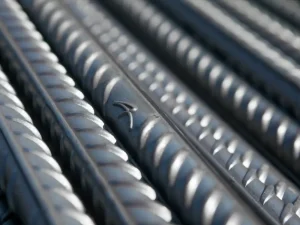
Steel is one of the most prominent materials used in metal fabrication. What makes steel stand out is its excellent strength and hardness. It mainly consists of iron (98%) and carbon (around 0.2 to 2.1%). This material undergoes almost all types of metal fabrications. Those include cutting, bending, welding, and the list goes on.
However, the presence of carbon makes steel extremely rugged and hard. Steel has various types that differ from each other in terms of properties. In fact, their chemical composition is also something that makes them unique. Let’s discuss each type of steel and its compatibility with metal fabrication.
Stainless Steel
Stainless steel is known for its corrosion resistance. Its primary elements include iron, carbon, and chromium. The presence of chromium makes this material corrosion-resistant. As you know, when chromium reacts with oxygen, it forms a chromium oxide layer. This layer is robust and prevents corrosion of this material. When it comes to metal fabrication, this material is very versatile.
It has optimal strength and durability. So it undergoes a bending process without showing any sign of deterioration. Additionally, the press brakes and rollers can effectively bend and form these materials. However, this material may require more power from press brakes for its bending. Apart from bending, welding, and cutting, these tasks are also not challenging.
Here are the popular ways to fabricate these materials:
| Fabrication Type | Tools / Machines |
| Cutting. | Laser cutter, plasma cutter, water jet, shears |
| Bending/Forming | Press brake, rollers |
| Welding. | TIG welder, MIG welder, spot welder |
| Machining | CNC mill, CNC lathe, drills |
| Finishing/Polishing | Grinders, buffing machine, electro-polisher |
| Assembling | Fasteners, clamps, jigs |
Alloys Steel
Alloy steel is less favourable than stainless steel. The reason is that it has a lower proportion of chromium than stainless steel. It also consists of nickel, molybdenum, manganese, and vanadium. The presence of nickel makes it more ductile. On the other hand, the presence of molybdenum significantly increases its heat resistance.
This material can undergo a wide range of metal fabrication processes. Those include cutting, bending, welding, and forming. However, welding is not as smooth as stainless steel. The reason is that when exposed to heat, this material undergoes cracking. Therefore, its welding requires pre-heating to ensure smooth welding. It is used to make pipelines and other machinery.
Carbon Steel
The primary reason behind the popularity of this material in metal fabrication is its affordability. Carbon steel is versatile and can be available in different grades and types. Those types mainly differ in terms of their carbon content. Here are their names and carbon content:
| Type of Carbon Steel | Carbon Content |
| Low-Carbon Steel (Mild Steel) | 0.05% – 0.30% |
| Medium-Carbon Steel | 0.30% – 0.60% |
| High-Carbon Steel | 0.60% – 1.50% |
The carbon steel with lower carbon content is generally soft, ductile, and weaker. On the flip side, carbon steel with higher carbon content is hard and less ductile. All these types of carbon steel undergo different metal fabrication types. However, their ease of fabrication can vary depending on their strength and hardness.
For example, bending and cutting of high-carbon steel can be a bit more difficult. This is due to the higher hardness that comes with higher carbon content. Similarly, mild steel (low-carbon steel) can be cut and bent easily due to its softening. This material can be welded with either MIG, TIG, or laser welding techniques without any issues.
2- Aluminum
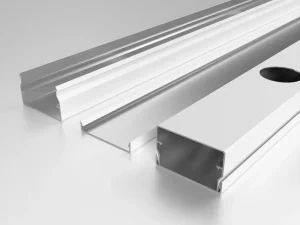
Aluminum is a prominent material that is actively used in metal fabrications. What makes this metal stand out is its lightweight. It is one-third of the weight of steel without compromising on strength. Due to this, it is widely used in aerospace and automobiles. Aluminum parts used in vehicles reduce their fuel consumption.
Additionally, they are durable enough and can withstand higher stress with ease. It can be bent, cut, shaped, welded, and processed easily. You can use both conventional and laser cutting methods for its cutting. It is noteworthy that aluminum is relatively softer than other materials. Due to this, its bending is less time-consuming.
The tools, such as rollers or press brakes, can easily complete their bending and forming. Additionally, all types of welding can be utilized when it comes to welding these materials. However, this material can conduct heat, which can pose issues during welding. So, you’ll need the right skill and expertise to complete aluminum welding.
3- Brass
Brass is an alloy made of zinc and copper. However, the proportion of these two elements can vary in different types. Due to this, the properties of those types can differ from each other. Brass with higher copper content will have excellent corrosion resistance and durability. On the flip side, higher zinc content in brass will make it stronger and harder.
Does this material undergo metal fabrication processes? The answer is a big YES. Brass is used in making different decorative products due to its excellent visual appearance. Its natural golden color makes it very attractive. Different machining techniques are used to convert raw brass into decorative and usable products.
This material is ductile, so its cutting or bending does not pose any challenges. Additionally, you can use both welding and soldering when it comes to creating joints (welds). What I love about this material is that it undergoes casting. You can melt it, pour it into a specific-shaped mold, and get customized shape parts.
4- Copper
Copper is another popular material for metal fabrication. What makes this material stand out is its excellent electrical conductivity. You’ll see this material being used in making electrical wires. Additionally, it is also used in other electrical parts such as motors and circuit boards. This material is also corrosion-resistant, which further enhances its value for metal work.
Parts made with this material remain in good shape for years to come. This material is softer and easier to fabricate, i.e., bend or cut. In fact, this material does not need high-end cutting methods such as laser cutting. Instead, you can use conventional methods such as sawing or shearing for its fabrication. Apart from cutting, its bend is also smooth, and it does not require extreme power from the bending tools.
5- Magnesium
When it comes to lightweight, magnesium tops the table. In the previous section, I mentioned that aluminum is very lightweight and is used in aerospace. However, this magnesium is even 30% lighter than the magnesium material. Manufacturers also add some alloy elements with magnesium to achieve the desired properties. Fabrication of this material is machine-friendly and less time-consuming.
Casting is a major fabrication process people use to make magnesium parts. The welding of this material is very challenging. If your parts need welding, I highly recommend not choosing magnesium. During welding, magnesium forms an oxide layer, which makes the molten part difficult to fuse. As a result, you’ll get a very weak weld that will be highly prone to cracking.
6- Bronze
Bronze is a popular alloy that consists mainly of copper (80–90%) and tin (10–20%). Apart from these, there are many other elements in the trace. Those include aluminum, manganese, and zinc. Like manganese, this material is not ideal for welding. The reason is that welding on this material can face porosity issues. So, the weld or joint can deteriorate over time.
Remember, welding is an integral part of metal fabrication. Due to unfavorable weldability, I consider this material less suitable for use in large projects. However, its better strength, hardness, and corrosion resistance are something you’ll love. Manufacturers use this material due to its better castability. It can be used to make complex-shaped parts and products.
7- Steel
Titanium is a premium material that is ideal for metal fabrication. You’ll see many high-end and expensive products made of this material. Both pure and alloy titaniums are available. Remember, some alloy elements are mixed with titanium to get the desired properties in this material. This material can be used in all metal fabrication operations.
For example, this material can undergo bending, cutting, stamping, and even welding. However, its welding can be more expensive than regular materials. This reason is that this material undergoes oxidation during welding. Operators generally use argon gas to prevent oxidation during welding. Forging, stamping, and sheet forming are the most common metal fabrication types.
Conclusion
Many believe that metal fabrication is a standalone process, which is wrong. It is a set of different methods and procedures for transforming a metal piece into the desired part. Those methods include cutting, bending, forging, welding, stamping, and the list goes on. In metal fabrication, all these processes can be used depending on product requirements.
Different materials can be used that are friendly to all those methods. In this article, I’ve discussed the seven most common metal fabrication materials. You can choose any of these materials depending on the needs of your project. Each of the materials mentioned above has its pros and cons. You must analyze each of these materials and choose the right one.