
Cutting technology plays a significant role in modern manufacturing. Two of the most common ones are laser cutting vs plasma cutting. Both are widely used to cut and shape metals, but they work in very different ways. This difference affects both the speed and the cost of these techniques.
The debate on these two cutting methods is not new. However, there are different opinions regarding the superiority of any of these cutting methods. Both of these cutting methods offer unique value propositions. In this article, I will compare both laser and plasma cutting and discuss their differences. So, let’s begin!
Overview of Laser and Plasma Cutting

Laser and plasma cutting are popular due to their cutting speed and precision. Both of them are used in large-scale industries. However, their working mechanisms are what differentiate them from each other.
The laser cutting technique relies on high-energy laser beams. The heat of these laser beams is very high. Due to this, this laser beam can easily melt and vaporise the metal or the targeted spot. In this way, it cuts the material efficiently. This method can be helpful to cut a wide range of materials.
Different types of laser cutting machines are available in the market. The older machines used to have more manual operations. Their precision was more dependent on operator skills. However, modern automated laser welding machines are a masterpiece of precision. They cut with precision, creating the shape that manufacturers need.
The plasma cutting technique uses a highly ionised gas. This hot ionised gas is called plasma. The temperature of this plasma is very high. When this gas comes in contact with a specific spot on the material, it melts and removes that spot. In this way, this cutting method creates cuts with exceptional precision.
Interestingly, both of these methods are excellent in terms of cutting precision. It is important to note that plasma is produced when an electric arc passes through the gas. This plasma is very powerful (even more than lasers). Due to this, it can create cuts on strong materials such as stainless steel and aluminum.
Difference Between Laser and Plasma Cutting
Both laser and plasma cutting are powerful tools, but they are designed for different purposes. Each has strengths and weaknesses that make it suitable for specific industries and materials. Let’s look at the 10 main differences one by one.
1- Cutting Method
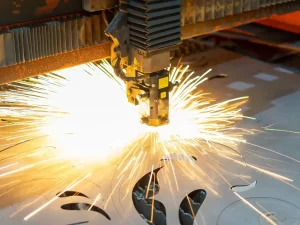
As I said earlier, laser cutting uses a powerful laser beam focused on the material. The heat from the laser melts or burns the surface to cut. A computer controls the beam, which makes it easy to create detailed designs and sharp edges. This process is very accurate, especially for complex shapes and small parts.
Plasma cutting uses an electric arc and compressed gas. The gas turns into plasma, which is extremely hot and melts metal quickly. This method cuts fast and works well on thick, strong metals. But it is not as precise as laser cutting. Manufacturers usually choose Plasma cutting when speed is more important than detailing.
2- Material Thickness
Laser machines are among the most precise sheet metal cutting tools for thin and medium sheets. It can cut steel, stainless steel, and aluminum up to around 25 mm thick. If the metal is denser, the laser becomes less efficient and slower. The cuts are very smooth and accurate on thin sheets. This makes laser cutting an excellent choice for detailed work on light and medium metal projects.
Plasma cutting is better for thick metals. It can cut steel plates up to 50 mm thick or even more with advanced machines. This method is fast and dependable for heavy jobs, which is why industries often use it for heavy metal components. Plasma cutting also gives workers a quick way to handle thick metal projects.
3- Material Type Used
Laser machines can cut a wide range of materials, not just metals. Different types of laser cutting allow machines to work not only on metals but also on plastics, wood, and composites. Because of this, lasers are used in many industries, such as packaging, electronics, and decorative design. They are useful when a project needs detailed and clean cuts.
Plasma cutting only works on metals that conduct electricity, such as steel, stainless steel, aluminum, brass, and copper. It cannot cut materials like wood, plastic, or glass. Plasma is mainly for cutting heavy metals, so it has fewer uses than lasers. Plasma cutting is often chosen in construction and manufacturing, where strong metals need to be cut quickly.
4- Speed of Cutting
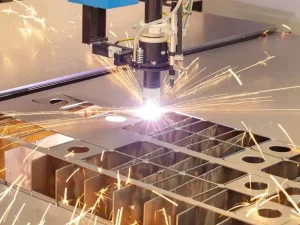
Laser cutting works very fast on thin sheets. The focused beam moves quickly and makes smooth cuts in small parts. For detailed designs, it is faster than plasma because it needs little finishing. However, the speed drops when the material gets thicker. This makes it ideal for fine work that requires both speed and accuracy.
Plasma cutting works faster on thick metals. The plasma jet melts large sections quickly, which makes it efficient for heavy industries. It does not make cuts as smooth or detailed as laser cutting. But it is a time saver on projects that focus on strength and size. This makes it a top choice for cutting large and heavy metal plates.
5- Edge Quality
Laser cutting gives smooth edges that often need no extra work before laser welding or assembly. There is little to no burr, so most parts need no additional finishing. This makes it ideal for projects that require high precision, such as medical devices or electronics. The quality stays consistent even for complex shapes. This helps save time and keeps the parts ready to use right after cutting.
Plasma cutting makes rougher edges compared to lasers. Some dross or slag may form along the cut, and workers often need to grind or polish the edges afterward. For industries where appearance matters, extra finishing is usually required. This makes plasma less suitable when projects demand a polished and clean look.
6- Precision and Accuracy
Laser cutting is very precise, often reaching an accuracy of about 0.1 mm. This allows it to cut complex designs with fine details. It is the best choice when parts must fit together perfectly or when tolerances are stringent. This makes lasers the go-to option for industries that rely on exact measurements.
Plasma cutting is less precise, typically with an accuracy of 0.5 mm to 1 mm. It is not the best choice for small parts or designs that need exact fits. However, for large structures like ship hulls or construction frames, this level of accuracy works well. Plasma cutting is a strong choice for projects where size and strength matter more than detailing.
7- Heat-Affected Zone
Laser cutting makes a small heat-affected zone because the beam is very focused. This lowers the risk of warping or changing the metal’s properties. It is a safe choice for delicate parts that must keep their strength and accuracy. This helps ensure the final product stays reliable and precise.
Plasma cutting makes a larger heat-affected zone. The wide plasma arc spreads heat to the nearby area, which can cause warping or slight damage to the material. This makes plasma less suitable for delicate, high-precision work. It works better on strong metals where a minor heat damage does not matter.
8- Cost of Equipment
Laser cutting machines are expensive, especially industrial models. The price is higher because they use advanced optics, cooling systems, and computer controls. Businesses usually buy them when they need high precision and work with thin materials. This makes lasers a significant investment, mainly for companies with high-tech needs.
Plasma cutting makes a larger heat-affected zone. The wide plasma arc spreads heat to the nearby area, which can cause warping or slight damage to the material. This makes plasma less suitable for delicate, high-precision work. It works better on strong metals where minor heat damage does not matter.
9- Operating Cost
Laser cutting has higher operating costs. The machines need regular maintenance, cooling systems, and sometimes expensive gases. Power use is also higher, especially on thick metals. This means companies must spend more to keep laser machines running smoothly. The higher running cost makes lasers better suited for large businesses with steady production.
Plasma cutting has lower operating costs compared to lasers. The machines are simpler and require less maintenance. They use electricity and compressed air, which are less expensive. This makes plasma a more affordable option for daily cutting work. Many workshops prefer it because it delivers good results without high running expenses.
10- Applications
Both laser cutting and plasma cutting are key methods in the metal fabrication industry. Laser cutting works well for electronics, medical devices, packaging, and decorative designs. The ability to cut non-metals makes it even more versatile. Many companies choose lasers when projects require accuracy, clean edges, and complex shapes.
Plasma cutting is standard in industries that handle heavy metals. It is widely used in construction, shipbuilding, automotive repair, and manufacturing. Plasma can cut thick steel quickly, which makes it useful for large projects. Workers often choose plasma when speed and strength matter more than fine details. Its ability to handle tough jobs makes it a popular tool in heavy industries.
Frequently Asked Questions
Is laser cutting better than plasma cutting?
Both are excellent in their ways. I consider laser cutting a better option for thin materials. On the other hand, plasma cutting is more powerful and ideal for fabricating thicker materials. Additionally, the plasma cutting is more inexpensive, which gives it an edge over laser cutting.
What are the disadvantages of plasma cutting?
Despite many advantages, plasma cutting has some downsides. Some of those are as follows:
- Only best suited for metals
- Produces rougher and less smooth edges
- Offer more heat than needed and cause wrapping at cuts.
Is plasma or laser cutting cheaper?
Plasma cutting is cheaper than laser cutting. The reason is that the equipment used in plasma cutting is relatively inexpensive. Additionally, these tools do not need regular maintenance. Their usage is also straightforward and does not require special expertise. All these factors make plasma cutting more cost-effective.
What is the main disadvantage of laser cutting?
Disadvantages of laser cutting include slow speed and incompatibility with thicker materials. The high cost of laser cutting is also a big drawback. If you use a laser cutter for thicker material, you’ll end up ruining your time. The slow speed will make the cutting process less effective, especially when bulk work is needed.
Concluding: Which One Should You Choose, Laser Cutting or Plasma Cutting?
Let’s conclude this debate. Which one should you choose between laser and plasma cutting?
I recommend laser cutting for most of the cutting needs. The reason is that this process creates cuts with low HAZ. The edges of cuts produced by this method are very smooth. Additionally, laser cutting is more precise than its counterpart. This technique can fabricate different types of materials.
However, laser cutting is super expensive, which can be a big drawback. Additionally, its ability to cut thicker material is also limited. If you want a cost-effective option, you can choose plasma cutting. This process is suitable for cutting thicker material with ease. However, it can compromise on precision and create rough edges. You’ll have to compromise on quality when choosing an affordable cutting method.