
In manufacturing, cutting materials into specific shapes is key for several industries. Among the most widely used cutting techniques today are laser cutting and die cutting. Both methods cut materials with precision. But the way they work, their speed, cost, and applications are different. This contrast sparks a debate over laser cutting vs die cutting.
Knowing the key distinctions between these two cutting methods is crucial. It helps you understand and choose the best technique for your project. However, using the wrong cutting method can lead to financial loss and waste time and money. Thus, to clarify your concepts, this article will explain the key differences between laser and die cutting. So let’s get started!
Basic Rundown of Laser Cutting and Die Cutting

Before we pursue the main differences, let’s first understand both techniques simply:
Laser cutting is a non-contact cutting process. It uses a high-powered laser beam to cut or engrave materials. This beam is directed through a special lens that focuses it to a tiny spot and creates heat. As a result, it melts, burns, or vaporizes that spot to make a precise and clean cut.
This cutting process is highly versatile. It can handle several types of material, including plastic, metals, and even wood. However, depending on the laser source, there are three main types of laser cutting. Those types include CO₂, fiber, or diode laser cutting. Each of those types is specific to different materials and has a different intensity.
Die cutting is a mechanical cutting method. It uses a pre-shaped tool called a die to stamp out shapes from materials. That die has sharp steel blades arranged in a specific pattern. When it is pressed onto the material, it cuts out the desired shape in a single motion.
Unlike laser cutting, this process involves physical contact. Moreover, it can produce large quantities of items in a very short time. That’s why it is very suitable for large production volumes. Also, handling large volumes makes it cost-effective. That’s why this cutting method is used in packaging, printing, automotive, and electronic industries.
Differences Between Laser Cutting and Die Cutting
Have you grasped the basic know-how of both cutting techniques? If yes, now, let’s put them head-to-head and see how laser cutting stacks up against die cutting.
1- Cutting Method
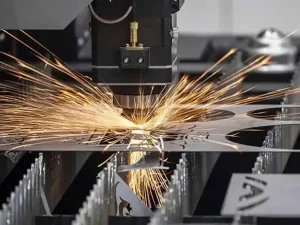
It is one of the significant differences between the two techniques. HOW? Actually, laser cutting works by using a very thin, powerful beam of light called a laser. This laser is so concentrated that it creates intense heat when it touches the material. That heat is enough to melt, burn, or completely vaporize the material along the cutting path. But remember, this is CNC-based cutting.
It means the laser follows a design stored in the computer and creates an exact shape. On the flip side, die cutting uses a physical tool called a die. This die is mounted inside a die-cutting machine. The machine applies pressure to cut through the material. Wherever the die’s blade touches, it cuts the material instantly. One press of the die cuts out the whole shape in one pass.
2- Contact with Material
This is another factor that differentiates laser and die cutting methods. For example, laser cutting is a non-contact method. This means the laser beam never actually touches the material physically. Instead, it cuts using intense heat and light from a short distance. The lens directs the laser beam to a tiny spot on the material, which heats and only melts that little spot.
Because there is no physical contact, the material does not squeeze or bend. On the reverse side, die cutting is a contact method. The metal die physically presses down on the material and cuts it. As a result, the blades of the die come into direct contact with the material surface. As the material faces high pressure, the chances of squeezing in brittle material increase.
3- Level of Precision
Level of precision refers to how accurately a cutting method creates the desired shape. If we talk about laser cutting, it is highly precise. WHY? As I said above, this is a CNC-based method. It means it uses a computer-controlled laser beam that is extremely thin. That beam follows complex curves, tiny holes, and intricate patterns without any loss of accuracy.
In fact, laser cutters can achieve tolerances as tight as 0.1 mm or even better. In contrast, die cutting generally cannot match the precision of a laser. WHY? The precision highly depends on how sharp and well-made a die is. Over time, as the die wears down, the precision also decreases. Moreover, due to the physical limits of the die blades, you cannot achieve high accuracy.
4- Complexity of Shapes
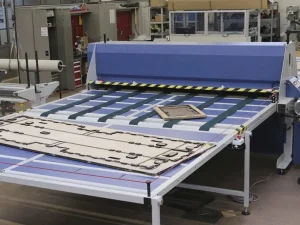
The complexity of a shape indicates how detailed or intricate a cutting method can handle. If we discuss laser cutting, it is excellent for handling very complex shapes. Since it uses a computer-guided laser beam, it can follow extremely detailed patterns without tool changing. You can move from a simple square to a highly intricate pattern just by uploading a new design file.
Die cutting, however, works best for simple or moderately complex shapes. The reason is that the die is physically made to match the design. So for highly complex designs, creating a die can be expensive and time-consuming. Even in some cases, it becomes impossible if the details are too small for the blades to handle. That’s why it is best for less complex and repetitive designs.
5- Speed & Efficiency
When it comes to speed, die cutting usually takes the lead in mass production. WHY? The reason lies in the creation of the die. Once the die is made, the machine can cut the same shape repeatedly in seconds. This makes it perfect for producing thousands of identical parts quickly. Moreover, this process is mainly automated. So it can run at high speed with minimal human effort.
On the other hand, laser cutting works differently in this context. The laser has to trace each shape or design individually. This takes more time, especially for thick materials or very detailed cuts. That’s why this cutting method is slower for large production. However, for small batches and prototypes, laser cutting can be speedy and efficient.
6- Edge Quality
Edge quality means how smooth and clean the edges of the cut material look after the cutting. This factor is crucial in metal sheet fabrication. Both techniques vary in this term. For example, die cutting is slightly compromised in edge quality. The edges are usually neat, but they might have slight compression marks, especially on thick material.
This is due to physical compression of the die, which bends the edges. Therefore, you will need post-processing for a fine finish. On the opposite side, laser cutting offers extremely smooth edge quality. This is because the material is cut by a focused beam without physical contact. Moreover, the laser seals the edges, preventing fraying and achieving a polished look.
7- Material Versatility
Material versatility refers to the variety of materials a cutting method can handle. Both die and laser cutting methods vary in this term. For example, die cutting works best with materials like paper, cardboard, thin plastics, foils, leather, and some fabrics. However, it struggles with brittle and thick materials as they bend due to compression.
Moreover, each type of material requires a different kind of die. So changing and making new dies can be time-consuming and costly. On the flip side, in laser cutting, versatility is much higher. Lasers can cut through a wide variety of materials. Those include wood, acrylic, metal, fabric, leather, paper, glass, and certain plastics. Plus, there is no need to change tools physically for any material.
8- Maintenance Requirements
Maintenance is the amount of care and tool replacement each cutting method requires. If we debate die cutting, it is a physical process and involves dies. Those dies require regular inspection, cleaning, and lubrication to function efficiently. Moreover, over time, dies wear out and lose precision. As a result, you have to replace them immediately.
On the reverse side, laser cutting requires less technical maintenance. For example, you have to clean the lens and mirror, check the alignment, and replace filters. It sometimes also involves the replacement of the laser tubes and other optical components. Overall, requires less maintenance, but technical knowledge is key.
9- Best Use Cases
Due to the versatility in several terms, the usability of both cutting techniques also varies. Let’s first discuss the best use cases of die cutting.
- Packaging boxes and cartons for products
- Greeting cards and invitation cards
- Custom labels and stickers
- Gaskets and seals in manufacturing
- Apparel patches and fabric shapes
Now, let’s look at the common uses of the laser cutting method:
- Custom signage and display boards
- Intricate jewelry designs and ornaments
- Architectural models and prototypes
- Personalized gifts and engravings
- Decorative metal, wood, or acrylic panels
10- Cost Structure
Cost and affordability are other significant factors distinguishing between the cutting techniques. For example, in die cutting, major expenses come from creating dies. This is a one-time upfront investment. Once the die is ready, you can make several identical shapes. This reduces the cost per cut, making it best for high production volume. However, the dies are worn out more often.
This increases the overall maintenance cost. On the flip side, in laser cutting, there is no need for physical dies. This reduces the upfront cost and makes it cost-effective for small batches. Moreover, the laser does not require frequent maintenance and replacements. This also cut down the maintenance cost. So in the long run, laser cutting proves more cost-friendly.
Which One Should You Choose, Laser Cutting or Die Cutting?
When it comes to choosing between laser cutting and die cutting, there’s no single answer that fits all needs. Each method has its unique strengths, limitations, and ideal uses. So the final selection depends on your project needs. But before choosing, here are some factors you must consider.
- Know Your Project Needs: First, know the requirements of your project. The right method (laser or die cutting) depends on what you are making. If you need highly detailed, precise designs or custom shapes, laser cutting is usually the better choice. However, if you are producing the same design in large quantities, die cutting is often more efficient.
- Consider the Material: Secondly, I highly recommend understanding the material you are using. Some materials, like metals and thicker plastics, are better suited for laser cutting. Because it can cut with precision without damaging edges. However, die cutting works well for softer materials like paper, cardboard, leather, and thin plastics.
- Look at the Quantity: The quantity of cuts you are making matters a lot. For small batches or one-time projects, laser cutting is more cost-effective. However, for mass production, die cutting can save time and money after the initial setup.
- Check the Timeframe: The timeframe can strongly influence your business. So, laser cutting is usually faster for smaller runs or one-time projects. Die cutting, on the other hand, takes more time up front. But it can be quicker for large production runs once the die is ready.
- Think About the Budget: Lastly, you should consider your budget before selecting a laser or die-cutting method. Laser cutting usually has lower setup costs but can be slower for high-volume jobs. On the flip side, die cutting requires more initial cost in making the die. However, it is faster and cheaper for large-scale production runs.
Conclusion
Laser and die are two of the most popular cutting methods. Both of these methods stand out due to their distinct features. This raises a powerful contrast between the two methods. For example, die cutting uses a die mounted in machines. The machine presses down the die and creates a cut. However, this method is more useful for large-scale production.
Moreover, it does not create intricate and delicate cuts. On the flip side, laser cutting is a more precise and accurate method. It uses beams that heat, melt the specific material, and create delicate cuts. However, this method is best for prototypes and small-scale production. In the end, the selection between the techniques depends on the requirements of your project.