
Sheet metal forming is an essential part of making many products. From car parts to kitchen tools and electronics, shaping metal sheets correctly is very important. Two popular methods are deep drawing and stamping. At first, they might look the same because both press sheet metal into shape. But they are used for different things. This article will explain the key differences between deep drawing vs stamping in metal sheets.
Overview of Deep Drawing and Stamping

Before discussing their differences, let’s first understand the basics of these forming techniques.
Deep drawing and stamping in metal sheets mainly differ in shape and the way the metal is deformed. They also use different tools and materials. Deep drawing is a type of metal sheet drawing that makes deep and hollow parts. On the other hand, stamping uses cutting or bending with less metal flow.
Both of these methods are popular in the metal fabrication sector. The deep drawing process helps create a deeper cavity in a metal sheet or material. The depth of this cavity or hollow structure is higher than the diameter of the parts. In the previous article, we discussed everything about the deep drawing process and the basics of metal sheet stamping.
Remember, this technique requires some expertise and skills from the operator. The reason is that deep drawing stretches the metal. As a result, the hollow structure is created. Stretching metal can lead to wrinkles or tears. So, it needs more control to get the job done. The stamping includes multiple operations, including blanking, bending, punching, and so on.
In stamping, a dedicated punch presses the workpiece (metal sheet) against the die. Due to the pressure from the punch, the material is pressed against the die and drawn into the cavity. The stamping process is widely used in different industries. Those include aerospace, automobiles, and the list goes on. Both of these techniques offer unique value propositions.
Differences between Deep Metal Drawing and Stamping
In the section above, I mentioned a basic overview of these forming techniques. However, there are many differences between metal sheet stamping and deep drawing. You must understand those to decide which of these methods is best suited for you.. Here are the main differences that will help you understand their capabilities
1- Material Flow and Forming Depth
In stamping, the metal sheet changes shape only on the surface. It stays mostly flat, with slight bends or cuts. The metal does not move much during the process. Because of this, stamping is fast and works well for parts with low depth. Items like metal lids, brackets, or covers are often made this way.
On the other hand, deep drawing is very different. The metal sheet has to stretch a lot. It flows into a die and forms the shape of the punch. The metal moves both down and around the sides. This allows the creation of hollow shapes like cans or fuel tanks. The depth can be just a few millimetres or several inches.
2- Geometry of Final Products
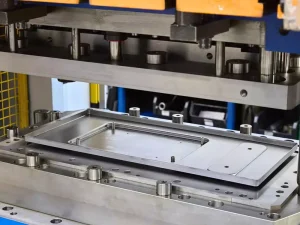
Stamping is best for flat or low-profile shapes. These are parts that are mostly 2D or slightly 3D. Typical examples are brackets and small metal covers. The shapes are usually flat, with simple curves or holes. Stamping cannot make deep or hollow parts. That’s why it’s used for simple designs. It also works well when you need to make many parts quickly.
Deep drawing can make more complex 3D shapes. These parts are deep, round, or box-like. The walls are vertical, and the bottom is closed. This is how items like kitchen sinks, cans, and fuel tanks are made. Deep drawing can create smooth, seamless parts. It’s useful when strength and shape are both necessary.
3- Material Requirements
Sheet Metal Stamping works with many types of metals. It can even be used on harder materials like stainless steel. In some cases, it also works with non-metal sheets. Because the shape change is small, the metal doesn’t need to stretch much. That means it doesn’t have to be very soft or flexible. Stamping can use thicker or thinner sheets depending on the part.
Deep drawing is different. It needs metals that can stretch without breaking. These are called ductile materials. Examples include aluminium, copper, brass, and low-carbon steel. The metal must bend and flow smoothly into the die. If it’s too hard or brittle, it can tear or wrinkle.
4- Tooling and Die Design
Both deep drawing and stamping are essential processes in metal sheet fabrication. Stamping uses simpler tools. The dies and punches don’t go very deep. Because of that, they are easier to make. This makes stamping tools cheaper and faster to build. They are also easier to fix or replace. For many basic parts, the same tool can be used repeatedly.
Deep drawing tools are more complicated. The dies are deeper and need more features. Things like draw beads and smooth corners help control the metal. Lubrication paths are added to reduce friction. Sometimes, pressure systems are used to avoid wrinkles or cracks. More planning is needed to get the right shape without damage.
5- Lubrication and Process Control
In stamping, lubrication is usually not very important. Sometimes, no lubricant is used at all. The tools don’t need special coatings. Since the metal doesn’t move much, there’s less rubbing and less heat. This makes the process faster and easier. Stamping presses can run quickly without many problems. The setup is simple, and you don’t need to check it often.
Deep drawing is different. It needs good lubrication to work well. The metal moves along the die walls and can stick to them. If the lubrication is poor, the sheet might tear or get scratched. Special oils or coatings are often used to stop this. Deep drawing also needs careful control. The force that holds the metal must be just right. If it’s too strong or too weak, the part can wrinkle or crack.
6- Production Speed and Efficiency
Stamping is a speedy process. It can make many parts every minute—sometimes even hundreds. This makes it great for big production runs. It’s also cheaper because it saves time and uses simple tools. Stamping presses can run all day with little stopping. This helps keep costs low and production high. Many factories use stamping when they need thousands of the same part.
Deep drawing is slower. The press has to move deeper and more carefully. This slows down the whole cycle. Also, deep drawing needs more steps for complex parts. Some parts may require several stages to reach the final shape. Even with machines and robots, it still runs slower than stamping. But it is the only way to make deep, strong shapes in one piece.
7- Part Strength and Integrity
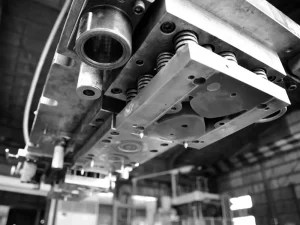
Stamped parts usually have the same thickness throughout. They are shaped with reasonable accuracy. However, bends and corners can become weak spots. These areas may collect stress and crack over time. To make the part stronger, additional steps such as flanging or welding might be needed.
Deep drawn parts are stronger because they are made from one smooth piece of metal. The walls are continuous, with no seams or joints. This gives the part better strength and durability. As the metal stretches, it also hardens a bit. This is called work hardening, and it can make some areas even stronger. Deep drawn parts are less likely to break or bend under pressure.
8- Multi-Stage Requirements
Stamping is usually fast and simple. Many parts can be made in just one or two steps. A tool called a progressive die can do blanking, bending, and punching all in one go. This means the metal moves through the press quickly, and each step happens right after the other. It saves time and makes the process easy to manage. Most flat or shallow parts don’t need more than this.
Deep drawing is more complex. Making deep or tricky shapes often takes many steps. The metal might need to go through several dies to reach the final shape. Sometimes, the metal becomes hard or brittle during the process. When that happens, it must be heated to soften it again. This is called annealing. It helps the metal stretch more without breaking.
Frequently Asked Questions
What are the disadvantages of deep drawing?
As I said above, the deep drawing involves the stretching of material. Due to this, the chances of cracking, tearing, and wrinkling increase. This process is more complex and needs an operator with proper expertise and skills. Additionally, its speed is also slow and needs an expensive tool, which is another drawback.
What are the disadvantages of stamping?
This process is ideal when you’re working with flat metal sheets. However, their performance can go down when you need to work on harder and stronger materials. Their tools also wear out more quickly. The punches, presses, and die face loads both experience consistent loads and pressure. So they can undergo wear and require regular maintenance.
Which is better, deep drawing or stamping?
Both of these techniques add unique value. Deep drawing is the best option when you need to create a hollow structure in parts. However, it’s expensive and slower, giving stamping an opportunity. The stamping press is faster and ideal when used with flat sheets. This process can create deep cavities with precision.
Conclusion
Are you still wondering about whether you should choose stamping or deep drawing? Well, the selection process can confuse you, especially if you’re a newbie. You should choose the deep drawing process if you want a hollow or cylindrical structure. The depth of this hollow structure will be greater than the diameter of the parts.
This process is expensive and slower, but it can help complete a specific role. On the other hand, you can choose stamping if you just want to create a cavity on the workpiece. This process is inexpensive, faster, and can work with a wide range of materials. I recommend understanding your needs first before making a final choice between stamping and deep drawing.