
Two popular materials used in different industries are stainless steel and titanium. Both of these materials offer excellent properties and unique value propositions. However, stainless steel and titanium differ in many ways. These distinctions lead people to debate titanium vs stainless steel.
Many people often consider stainless steel a superior option. What they admire most about this steel type is its low cost. However, titanium is premium and expensive, but it has some top-notch properties. Its excellent strength and durability surpass those of stainless steel. In this article, I will compare titanium and stainless steel head-to-head. So, let’s get started!
Basic Rundown of Titanium & Stainless Steel

Before exploring the differences, let’s take a bird’s-eye view of these two materials.
Titanium is a premium, naturally occurring material with a silver-grey appearance. It is known for its lightweight and exceptional strength. It is available in both commercially pure and alloy form. Stainless steel is an alloy consisting mainly of iron and chromium (around 10.5%). This chromium in the alloy makes it both stronger and more corrosion-resistant.
Titanium and stainless steel are not new materials. They have been in use for several decades now. Titanium was first discovered in 1791 by William Gregor. However, this material was not widely used until the 1900s. Why? That’s because the extraction process of this material was very complex and expensive. Extracting even a very small amount of titanium was very costly at that time.
Later in the 1900s, modern technology helped make its extraction a bit easier. On the other hand, stainless steel was also first developed artificially by Harry Brearley in 1913. As you know, steel is one of the oldest materials. Stainless steel is a type of steel, but it was developed when Harry Brearley added about 10.5% chromium.
This chromium gave steel excellent corrosion resistance, improving its overall value. Both stainless steel and titanium have different types. You’ll find commercially pure titanium (Grades 1 to 4). Similarly, manufacturers add alloying elements to produce titanium alloys. Similarly, stainless steel comes in various types. These include ferritic, austenitic, martensitic, and duplex.
Difference Between Titanium and Stainless Steel
As I said earlier, stainless steel and titanium are often compared. That’s because both have some excellent properties that improve their performance. Stainless steel is generally considered a cheaper alternative to titanium. In the section below, you’ll learn their key differences and decide which of these materials is best for you.
1- Appearance & Composition
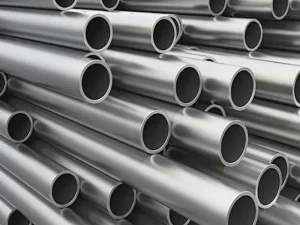
Stainless steel has a shiny and polished appearance. This shine makes this material more visually appealing. On the other hand, titanium has a silver-grey appearance. However, this color makes titanium look darker and dull. So products made with titanium are not visually pleasing.
I recommend choosing stainless steel if you’re making decorative products. Compared to composition, titanium is a naturally occurring metal. Conversely, stainless steel is an alloy. It contains iron, chromium, molybdenum, manganese, silicon, and more. The proportions of each alloy element can change the properties of this stainless steel.
2- Durability & Corrosion Resistance
Both titanium and stainless steel perform excellently against corrosion. However, I consider titanium slightly better due to its very strong oxide layer. Titanium, when exposed to oxygen, forms an oxide layer. This layer covers the titanium materials and is very strong.
So, it does not break down in harsh conditions and protects the titanium from corroding. As a result, manufacturers prefer titanium for marine parts. Interestingly, even if this layer breaks, it quickly heals. These oxide layers ensure long-lasting corrosion resistance. On the other hand, stainless steel also has chromium, which makes a chromium oxide layer.
This layer protects the stainless steel from corrosion. However, this chromium oxide layer is not as strong as those on titanium. Over time, it breaks down, and its self-healing can take slightly longer. So, titanium wins by a small margin in terms of corrosion resistance. Since titanium is more corrosion-resistant, it lasts longer than stainless steel and is more durable.
3- Hardness & Strength (Load Capacity)
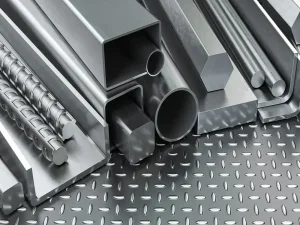
You might have heard that titanium has an excellent strength-to-weight ratio. It indicates that titanium is stronger despite being very lightweight. However, when subjected to weight, this material can deflect. However, titanium alloys are very strong, with tensile strengths of around 900–950 MPa.
On the other hand, stainless steel is exceptional in terms of load-bearing capacity. The deflection is very minimal when you put massive loads on this material. In fact, the tensile strength of some martensitic stainless steels is around 1000 MPa. However, stainless steel is a bit heavier, which can be a drawback. Remember, the difference in strength is very small between these materials (different types).
However, this small margin matters in some applications where materials have to support large loads. Titanium is generally softer and less durable, so it can be prone to scratching, friction, and wear. On the other hand, stainless steel is rigid, hard, and scratch-resistant. It does not wear out quickly, even under repeated friction.
4- Strength-to-Weight Ratio
Strength-to-weight ratio is one of the most important parameters to consider. It refers to how strong a material is compared to its weight. Some industries, such as aerospace, prefer materials that are both strong and lightweight. Generally, stronger materials are heavier, which is not preferred in the aerospace sector. Titanium is very lightweight, with a density of 4.5 g/cm3.
Despite its lightweight nature, it offers exceptional strength relative to its weight. For example, titanium (Ti-6Al-4V) is as strong as stainless steel but weighs half as much. Conversely, stainless steel has a density of 7.8 g/cm 3. So, stainless steel strength comes with a higher weight. So its usability in the aerospace industry is not favourable. If you prefer an excellent strength-to-weight ratio, I recommend titanium material.
5- Chemical & Temperature Resistance
Titanium is a superior option for chemical and heat resistance. It can easily withstand the harshest conditions. Even when exposed to harsh chemicals such as acids, it remains in good condition. You won’t see any sign of deterioration on the surface of titanium after dipping it into strong acidic solutions. The melting point of titanium is 1668°C, which makes it heat-resistant.
As a result, many aircraft engine parts are made of this material. On the flip side, stainless steel is also chemically resistant. However, it cannot survive exposure to the harshest chemicals, such as strong acids. It can show signs of deterioration when exposed to such chemicals. Additionally, the melting point of stainless steel is around 1450°C, which is lower than that of titanium. I don’t recommend stainless steel if you want better heat resistance.
6- Thermal & Electrical Conductivity
Both titanium and stainless steel differ in their thermal and electrical conductivity. Remember, conductivity in this context refers to how easily a material allows the transfer of heat or electricity. Titanium has compromised heat and electrical conductivity. This means it does not conduct any of these, making it suitable as an insulating material.
As a result, titanium is used to make aircraft parts that require electrical insulation. On the other hand, stainless steel conducts heat and electricity. Remember, its electrical conductivity is not as high as that of aluminum or copper. So it is not used to make wires. However, its excellent thermal conductivity makes it an ideal material for cookware.
7- Ease of Fabrication & Machinability
In the above section, I mentioned that titanium is less hard than stainless steel. Right? So you might think titanium should be easy to machine and cut. However, the reality is different as these materials are very challenging for machines. Why? This is because titanium becomes harder locally where cutting tools cut.
Even if cut, this material can become sticky, and you might notice some stickiness on the cutting tools as well. So cutting, drilling, and shaping titanium is very difficult and requires extreme care. On the other hand, stainless steel is easier to machine. The cutting tools can cut, drill, and shape without exerting extreme force or power. I recommend stainless steel if you need better ease of fabrication.
Quick Highlight: Welding is an important process used in the metal fabrication sector. It helps join two metal pieces by melting them. Welding titanium is very challenging, and you need to use shielding gas. The margin for error is small when welding titanium. In contrast, stainless steel is relatively easier to weld, even if you have beginner-level expertise.
8- Cost & Applications
As previously mentioned, titanium is a premium material. It offers an excellent strength-to-weight ratio and corrosion resistance even in marine conditions. Additionally, its performance against harsh chemicals is also decent. However, extracting titanium is a complex process that requires expensive machinery.
Additionally, the fabrication of titanium is very difficult due to the galling it experiences. These factors make titanium more expensive not only initially but also over the long term. On the flip side, stainless steel is cheaper and easily available in the market. In fact, all types of stainless steel are cost-effective. Moreover, they also offer excellent corrosion resistance and are easy to fabricate.
If you are looking for a budget-friendly project, I recommend stainless steel. Titanium is commonly used in the manufacture of aircraft parts due to its excellent strength-to-weight ratio. On the other hand, stainless steel is preferred in the plumbing sector. Moreover, its use to make cookware is also common. Here is a table comparing common applications of titanium and stainless steel:
Titanium Applications Stainless Steel Applications
Aerospace parts, Construction & structural components
Medical implants, kitchenware & utensils
Racing bikes & sports gear , Piping & plumbing
Marine equipment Industrial machinery
Chemical processing, Automotive parts & tools
Frequently Asked Questions
Which is better: titanium or stainless steel?
Both titanium and stainless steel offer distinct pros and cons. Stainless steel is usually the better choice if you’re on a tight budget. However, titanium is suitable if you need corrosion resistance, lightweight, and excellent strength. Additionally, this material offers top-notch electrical and thermal insulation.
What are the disadvantages of titanium?
Here are some known disadvantages of titanium:
- High priced
- Difficult extraction
- Difficult to machine and fabricate
- Not visually appealing; looks dull.
Is titanium more expensive than stainless steel?
Yes. Titanium is very expensive, mainly because of its difficult extraction process. However, you’ll get an excellent strength-to-weight ratio, which sets it apart. As a result, manufacturers use titanium to make various aircraft parts.
Conclusion: Which One Should You Choose, Titanium or Stainless Steel?
The decision between stainless and titanium can spark debate. Why? This is because both of these materials have different strengths and weaknesses. So you should decide what you want before making a final decision. If you have a tight budget, I would urge you to choose stainless steel. It will offer decent corrosion resistance, strength, and ease of fabrication.
Additionally, this material has excellent visual appeal due to its shiny surface. However, if you want extreme performance, stainless steel may not be the best option. In this case, you should consider using titanium. That’s because it offers top-notch chemical resistance and is very lightweight. Additionally, it can remain in good condition even in highly moist or marine environments.