
Sheet metal brackets are important components used in different industries. They help connect or secure two different components together. Most brackets are attached using bolts or screws. Interestingly, there are different brackets available with a variety of shapes. That’s where having a guide to sheet metal bracket design becomes crucial.
Some brackets are L-shaped, while others are Z-shaped or angled. It is worth noting that each shape affects the effectiveness of sheet metal brackets. Expert engineers carefully design these differently shaped brackets. In this article, I will discuss everything about the basics of metal brackets and their design. So, let’s get started.
Overview of Sheet Metal Bracket Design

Before discussing more, let’s first understand the basics of brackets and their designs.
Sheet metal brackets are small components that help connect two components. Apart from connection, this structure also withstands loads of attached components or parts. These brackets are made of thin metal sheets such as aluminum or stainless steel. They generally have holes where a bolt or screw is used to fasten the bracket to different structures.
The simplest use of metal sheet brackets is to attach parts. For example, you generally cannot attach a shelf to the wall without a bracket. Similarly, doors require brackets for secure attachment to walls. The use of these brackets is simple: they fit with a bolt that goes into the hole. This secures the sheet metal bracket in place, thereby strengthening it.
The sheet metal bracket design involves planning, shaping, and fabrication of these brackets. It is worth noting that brackets are not made randomly. In fact, engineers strategically design the bracket’s shape. They determine hole location, size, flange dimensions, bend angles, geometry, and other parameters.
These parameters then help make the final fully functional design of the bracket. Designing brackets is crucial before fabrication. This step helps engineers decide where the bend will be and how far the hole will be from the bending angle. If this hole is too close to the bend, the sheet metal bracket may not work properly.
Interestingly, modern software such as CAD is used to design sheet metal brackets. This software helps designers see how the final bracket will look. This helps determine whether the specific design will make the bracket functional. Once the design is complete, the next step is fabricating the brackets. This process involves fabricating sheets using cutting, punching, bending, and other processes.
How are Sheet Metal Brackets Fabricated & Designed?
Sheet metal brackets are not made in a single step. Instead, engineers must plan each bracket to be both functional and durable in the long run. In the section below, I will discuss the three-step process for designing and fabricating these brackets.
1- Creating the Bracket Design (CAD Modeling)
Manufacturing of sheet metal brackets starts with planning. Each bracket is made differently, as it faces different loads and use cases. Even the location where a bracket will be used or installed is also considered during planning. After initial planning, the next step is to create the final designs.
In this phase, CAD designers are helpful. They work closely with engineers and design brackets using CAD software. During this design, each parameter is taken into consideration. The engineers decide the bending angle, hole placement, shape, geometry, and many other parameters.
Quick highlight: Remember, this CAD design must be very precise and error-free. The reason is that the final shape and geometry of the bracket you get after fabrication will be identical to this design. If the design has a defect, your final bracket will also have that defect. As a result, the bracket’s functionality may be affected.
2- Cutting & Punching the Sheet Metal
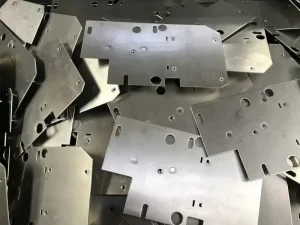
Once the design is done, the next step is about fabrication. For this, manufacturers use metal of the desired size and dimension. This size is cut using dedicated CNC-based laser cutting machines. These machines cut the sheet with precision. It is worth noting that the cutting machines use the CAD design (in code form).
So the laser head moves according to the coded instructions to cut the metal sheet. As a result, manufacturers get the right shape of the bracket. Once cutting is done, the next step is to create slots or holes in the bracket. For this, CNC-based punching machines are used. They also work with computerized instructions and punch holes in precise locations. So the holes are of the precise size so that the bolt can easily fit in them.
3- Bending and Forming the Bracket
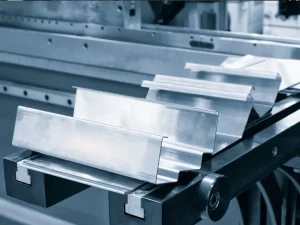
After punching, the final step in making a sheet-metal bracket is to bend and shape it. This process involves a dedicated punch press. These machines are CNC-based and create the bend at the desired precise angle. Manufacturers place the parts (punched) into the punch press (over the die). The punch descends, pressing the materials against the die.
This force pushes the material into the die and shapes it. The force of the punch applied to the parts is controlled carefully. Controlled force ensures the punch creates the correct bend angle in the part. As you know, there are different shapes of sheet metal brackets available. Examples include L-brackets, U-brackets, or Z-brackets.
Each of these shapes requires a die with a unique shape. For instance, the die must have a cavity in the shape of an L when making an L-bracket. When the part is pressed against the die, it assumes the shape of an “L”. After bending and forming, manufacturers receive a functional sheet-metal bracket. Then, manufacturers use surface finishing to prepare the brackets for use.
Key Bracket Design Considerations
As I said earlier, planning and designing the bracket are crucial steps. How good a bracket will be primarily depends on its design. There are a few factors to consider when planning and designing brackets.
1- Bend Radius and Placement
As discussed above, a punch press is used to bend the brackets. Having the right bend radius is crucial for the proper functionality of the brackets. Generally, the bend radius depends on the material’s thickness. For example, if a metal sheet is 5 mm thick, you should keep the bend radius at least twice its thickness. Additionally, I highly recommend keeping bends away from holes. If a bend is done close to a hole, it may affect the hole dimensions.
2- Size of Holes and Dimensions
As I said earlier, the hole size matters a lot in the bracket. Why? The reason is that the hole is where the bolt or screw fits, allowing the parts to be attached with brackets. If the hole is slightly larger or narrower, it might not serve its function. The bolt or screw may not fit into it. Therefore, you should create a hole of the right size, away from the corners or edges. The reason is that holes on the edge can deteriorate over time. Additionally, all holes in the bracket must have the same spacing.
3- Material & Its Strength
A wide range of materials is available for making sheet metal brackets. However, they differ in strength and weight. Some examples of materials you can consider include:
- Mild steel
- Aluminum
- Stainless Steel
- Galvanized Steel
- Brass & Copper
Interestingly, each of these materials has different strengths, weights, and overall values. For example, mild steel is an affordable option but has slightly compromised corrosion resistance. Similarly, stainless steel is expensive but offers excellent strength and corrosion resistance. You can choose between these two metals if steel is the priority. If you want a lightweight bracket, I recommend aluminum. It is worth noting that different brackets have different strength and weight requirements. So you should choose the material to get the best result.
4- Flange Proportions
Flanges are the arms present at both sides of the brackets. They maintain the bracket’s shape and provide space for bolts and screws. Flanges are present on all types of sheet metal brackets. Remember, the correct flange proportion is crucial for proper bracket function. The flange’s width and size should be balanced. If the width is too low, the bracket may not provide enough support. Additionally, bolts or screws also may not fit well on the shorter flange. If this flange is larger, the bracket would be heavier and bulkier.
5- Bend Count and Direction
A single sheet-metal bracket can have multiple bends. These bends are predetermined and part of the design. Making something larger is not a good way to make it more durable and bulkier. That’s because the bracket becomes weaker if it has too many bends. The risk of cracks is high when brackets have too many bends. Manufacturing brackets with multiple bend counts is also becoming increasingly difficult. Additionally, you should decide the right bend angle. Using too steep bending angles is also not a good idea for the durability of the brackets.
Post-Processing and Finishing of Sheet Metal Brackets
The sheet metal brackets are made through designing, fabrication, and bending. However, once made, they then undergo some post-processing. Manufacturers use multiple finishing options. The major advantage of these processes is to improve the visual appeal and durability of these brackets. Here is a list of the most common post-processing techniques for sheet-metal brackets.
- Painting
- Anodizing
- Deburring
- Galvanizing
- Powder Coating
All of the processes are used once the bracket is made from the metal sheets. Deburring is a process that removes unevenness from the surface of the bracket. As a result, its surface becomes smoother. You won’t notice any texture or abrasion on the bracket after deburring. Interestingly, powder coating also helps make brackets visually appealing. This method involves spraying dry powder on a bracket and then heating it.
This heat melts the powder, keeping it on the bracket. When the powder dries, it forms an additional coating that adds decorative appeal. Apart from powder coating and deburring, all other processes are used to improve the durability of brackets. These methods enhance the corrosion resistance of sheet-metal brackets. These methods include painting, galvanizing, anodizing, plating, and so on.
Conclusion
Undoubtedly, sheet metal brackets are very important components in modern manufacturing. They play a big role when assembling components that require different parts. For example, you can connect doors to walls using these brackets. Their use is common across a wide range of industries.
These include automotive, construction, aerospace, electronics, and more. In this article, I have discussed sheet metal brackets, including their design and manufacturing. My main focus has been on designing these brackets. You’ll learn the key considerations for designing or planning brackets.